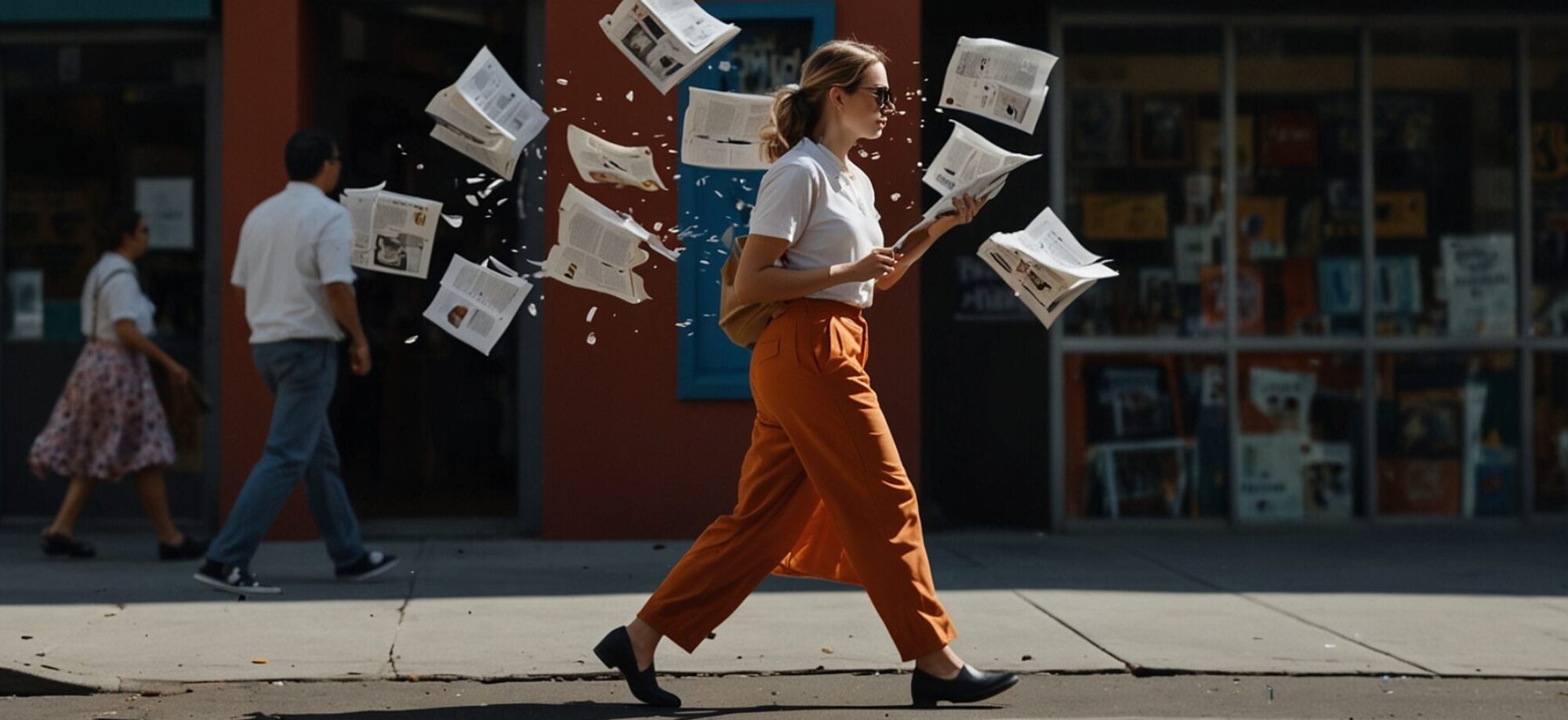
I am subtracting myself from some of my many paths that I use to move from here to there -a body in mobility-, towards the conjunction of the totality, towards plurality -also in movement, always in movement-.
I am generally satisfied with the uniqueness of this body and I conjugate myself in a whole universe of my equals. It is my own uniqueness, of body and mind.
I go through emotional and psychic places that regularly make me reconsider my functional separation (dissociation) from reason, which accelerates or delays my displacement.
The paths that I somehow observed as passable, are transformed -from time to time- into absolute obscurities and therefore my achievements are transferred to certain failed misencounters; however, some of these misencounters are trials perpetrated and consummated, which I have undertaken to transform them into victories, in the presence of the conscience, which procures a reinitiation towards the return, towards starting points, for a possible hope of finding greater illumination in the different paths chosen, to rescue what has been lost by the obstinacy of it, of reason. Several are the crucial moments in which I question myself if I should refuse the calls of some “extra-natural” help.
But the task is not at all easy, because the thresholds of return become indefinite and I no longer wish to return to the everyday world of reasoning.
Therefore, I am constantly trying to complement it, that disoriented reason, or to replace it, since it has failed to achieve the human ideals: tranquility, happiness and freedom. Now it is my turn.
A Hill or elevation of the terrain would be a representation of the different behavioral scenarios of the two of us, two mental functions, which can serve as a figurative analogy of the behaviors and movements, subtle forms of human behavior.
The Hill is the highest point that is observed in the whole horizon dominated by the spirit. By different paths of existence, it can descend from that point and go up again, going through the most extreme aspects from tragedy to comedy.
I like to climb a hill… but… climb a mountain?
Hill …upwards and Hill …downwards, are manifestations of being, which unfold in the same mythical, archetypal theme.
Hill down is a representation of that part of the being that in its experience has assimilated those events that in some way have formed or deformed it. Tragedy is the artistic manifestation associated with this mythological theme, plucked as a revelation from the unconscious. Thus, tragedy, as the fragmentation and the return to the configuration (the union) of archaic (archaizing) forms, is a downhill path where suffering allows the reconstruction of archetypal images.
In the comedy, represented in Colina hacia arriba, the unconscious seeks balance and manifests its exultation (joy) and leaves sadness behind for other moments, where the lord of time gloats.
Through these two fragmentations, the obscure paths through which “some” parts of the mind travel and through the tragic or pleasant (pleasurable, pleasing) experience that is aroused in each of them, the spirit tries, in its own way, to prevent them from dispersing, since it is certain that if it continues along the rational path, quite rough, it will only lead the being to become more disunited, more fragmented, and therefore to the disintegration of the inner self. The unconscious is no longer willing to allow reason one more chance; in its special way of participating (acting), it tries to show the emotions, from those elementary to the most complex, as an integral part of the higher capacities of the psyche: the aesthetic, intellectual and religious faculties.
In the manner of a shot that moves these higher capacities as a result of the “real” struggle that arises with the conscious part. This struggle of the spirit is what allows human evolution towards higher forms of being, such as art; but it also involves it when its results are not positive for the being.
Just as the confrontation between these two entities (the conscious and the unconscious) generates difficulties and pathological states of the mind, by blocking (impeding) the flow of evolution (favorable development) being trapped and repressed in the subconscious, so they give rise to higher mental states, either in an intellectualized way (the sciences) or sublimated (the arts).
Staying alert all the time is exhausting. A short pause (respite, rest) in the middle of the road would be enough to recover my lost energies.
Calmness allows the lethargic body to wake up to the overwhelming reality and encounter its own suffering and return to the threshold of my unconscious world, finding itself in the passage of time, with its unreality and recreating itself in a fleeting instant.
The alteration in that moment generates ascents and descents through different paths, which connect some and others, but which do not manage to make reason coincide with me, in those fleeting moments (times).
One is dominated by tragedy and the other seeks compensation for the circumstance, and everything develops in a sleeping conscience, which in its wandering, the unconscious wants to manifest itself to excite it.
The hormonal systems are the best helpers that both the consciousness and the unconscious have to strengthen and defend both the physiological and the mental part of the being.
Perhaps the hormones that have a close and direct link with the psychic functions, are the ones we should be more attentive to and take greater care of their functioning. Thanks to this type of hormones, it is possible to disguise and hide almost all the appetites by which that subtle muscular part that enriches the soul, comes to wear out the spirit and offers us a demoralizing suffering. That is to say, the hormonal participation allows the human being to cope in a less aggressive way with the psychological aspects that are constantly affecting him, either by the stimuli of the physical and social environment, or by the own psychic structure of each individual.
As the various hormonal systems cease to function properly, the stimulating vectors become more direct and harmful (and inciting) to individual behavior.
This great “metapsychic” hormonal system is the main helper (assistant, collaborator) of the individual unconscious, and by extension, also of the collective unconscious; so named in this post, because it cannot yet be scientifically demonstrated. It is in this metapsychic system where the individual unconscious extracts the information to define the traces and routes (routes, paths) to “walk” through the different psychic paths of the being.
Which and in what do these paths consist?
Invariably and individually I walk permanently, without resting, through different places, spaces, forms, to understand if there is or should be that uniqueness in the spirit, uniqueness in the mind of the being, but above all its participation -of its “movement”- in a universal way.
I am not a sub-function or appendix of the consciousness.
# 609.- THE TURN IS FOR THE INDIVIDUAL UNCONSCIOUS
Let us keep in mind that the individual unconscious adjusts to its own trajectories, but sometimes it leaves them, abandoning them and is guided by other instinctive constructions, moving and orienting itself according to the process of the healing machination. Sometimes we also find it dazed and it leads itself to points where reason points it out as “wrong”.
They may be stimulated by the repressed consciousness and the damaged subconscious; the former frightened; the latter, daring, unbridled.
The great secret is that the unconscious helps itself in many ways, both in individual and collective practice. The hormonal systems -the psychic killer fundamentally- are a small part of what the physiological supports it, and the collective unconscious guides it towards universal strata, where the human being can fully develop.
Physical walking is an analogy of the unconscious, it is a reality. The WALK-RWD system is a mental and functional process that supports it realistically and subliminally.
We must recognize that the individual unconscious is not a sub-function or appendix of the conscious part of the being (Future posts THE CONSCIOUS AND THE UNCONSCIOUS IN THE APPLICATION OF THE WALK-RWD SYSTEM, WALKING THE 4 PATHS OF THE UNCONSCIOUS, THE CONSCIOUS AND THE UNCONSCIOUS IN UNITY, FOR THE ACHIEVEMENT OF OBJECTIVES, THROUGH THE WALK-RWD SYSTEM).
Surely all our senses, both external and internal, act and deploy their functions with different degrees of participation in relation to the decisions we make to choose a direction and a sense when we start walking. (Future posts WALKING AND THE EXTERNAL AND INTERNAL SENSES; THE SENSES OF SIGHT AND THE WALK-RWD SYSTEM; THE INTERNAL SENSES AND THE WALK-RWD SYSTEM).
Of the 5 external senses, I consider that 3 are the ones that make the most effort on these occasions to direct and give meaning to our walks: sight, hearing and smell; however, touch and taste should not be completely discarded.
Likewise, the internal senses, also called spiritual or intellectual are an important part in these activities when we start walking; these have been noticing, discerning, understanding and defining over time, although they have always been with us, and we can make a list of them without having a precise specification of all, namely: Orientation, Spatial, Common Sense, Intuition, Memory, Perception, Cognitive, Imagination, Fantasy, Muscular, Movement, Temporal, Proportions, Aesthetic (Future Post WALKING AND THE EXTERNAL AND INTERNAL SENSES).
There will be enough objections to discard several of them, however, they serve as a guide for our purposes in this post.
Ortega y Gasset considers the existence of 11 senses, expressing: there are 11 senses that psychologists have taught us to differentiate. Among them … visible, audible, tangible … are differentiated by the very objects they perceive (“objects of the senses”), … generating in us sensations, by which we notice and perceive the presence and existence of those objects.
For this subject of the cardinal points and orientation, we could consider including some instincts, such as the instinct of preservation and survival of the human species, since this generally leads us towards less aggressive (offensive) points for the care, conservation and development of the species. Again, it could be objected to this as an internal sense, since it is an instinct and not a sense, but I consider that it should be taken into account when discussing and reflecting on the spatial and temporal orientation of the human being.
It is clear to anyone that the direction and sense we take when we start walking are influenced by both our conscious and unconscious parts. In this regard I would like to express some aspects related to this confabulation of our senses with reason. Some years ago I defined a character, I called him GOVOT, who was intrinsically designed to listen and attend only to his senses in order to be able to face his rational part. From this idea arose 2 books where this character always discourses with soliloquies, with brief monologues -GOVOT. HIS SILENCE DECONSTRUCTING HIS SHADOW (1)-, where I try to transmit that we must become aware (to be conscious ?) -or should I say unconscious- of the struggle to which we are always exposed between our conscience and our unconscious, and generally we do not realize it; and the other, a theatrical play GOVOT. THE SPEECH OF THE SENSES (2), which are also succinct monologues but I considered that, presented as a theatrical work, could communicate this issue of the permanent struggle between these two functions of the human being. Both texts are GOVOT’s speeches where he tries to detach himself from all reasoning, and achieves a long self-absorption with himself, that is to say, with his own senses that procure him a quasi-isolation from reason.
I believe that GOVOT could be a guide on this need to move away from reasoning and help us in this choice of direction and sense that we must take every day of the year, regarding the walks, but also in terms of our work and social activities, and likewise, we could transmit to him that he must accompany us in our walks.
GOVOT
2.-SENSE OF ORIENTATION
For the development of the present post, perhaps the most relevant is the sense of orientation, which obviously will have a close relationship with others, both external and internal. What degree of participation does it have? Apart from this fundamental one, which of the 3 external physical ones will be the one that most participates, so that we incline with some direction and sense, while we walk? The smell of the vegetation, of the wind, of the absence of humidity, … the sound of the song of the birds, of the wind crossing the branches of the trees or bushes, … the color of the grass, of the plants, of the sky, of the flowers, … In what percentage do all of them participate to place us in a certain direction and in a certain sense?
We could affirm that we hardly become aware of these senses when we walk, and surely, the one we are least aware of is that of orientation; however, we do consider its participation when we feel lost somewhere.
This internal sense of orientation is fundamental to direct and give meaning to our walking (Future Post LABYRINTHINE WALKING EXERCISES ON THE SENSE OF ORIENTATION).
We can assure that all cultures that have developed on Earth, have formed a system related to the cardinal points: North, South, East and West; and some like the Mayan Culture were more conscious of this phenomenon; and as an example of this astronomical and physiological-mental inclination, we will expose the system that represents the plastic work of the Chac Mol -one of the most prominent sculptures of the Mayan Culture and that has been located in several archaeological sites-, that the faithful practitioners used, adjusting to the orientation of this venerated divinity: Towards the sun, to the East, which is where it rose with its first rays (Future Post THE WALK-RWD SYSTEM AND A SOLAR RAY BATH). The Chac Mol is one of so many plastic works, besides the architectural and astronomical ones, that this people used in their orientation on the terrestrial surface, in their astrological daily life and for the cosmic observations and their respective mathematical calculations used in the construction and operation of their calendars.
CHAC MOL AND THE COSMIC LINES
It is very probable that this millenary people in all its fundamental and glorious three-dimensional sculpture had incorporated the cosmic coordinates and the cardinal points, as we can appreciate in the Chac Mol.
On spatial orientation, Cassirer expressed: “The primary intuition of space and the primary articulation of time merge into one and the same basic concrete intuition, namely, the alternation of light and darkness, of day and night. Likewise, the same scheme of orientation, that is, the same distinction of the zones and directions of the sky, which is at first purely emotive, governs both the decision of space and that of time at certain periods.” (Filosofía de las Formas Simbólicas [Philosophy of Symbolic Forms], Volume II, F.C.E., Mexico, 2003, pp. 143-144).
Of course, it is the three dimensions of space together with time, which in an accurate way, mathematically and precisely, the Mayan people were able to develop great advances, to unravel the astronomical orientations, which in the last century have been able to confirm their great advances in this field.
3.-THE SEASONS OF THE YEAR.
We have already commented on other occasions on the symbolism that the seasons of the year have represented in the cosmology of some ancient peoples. Besides being aware that the cardinal points have a different effect on our being, it is also essential to take into account the impact we suffer throughout the calendar year; that is, that is, during the changing months in the weather and sidereal-astronomical position, and according to our actions and activities, we receive different degrees and types of influences on our bodies, both physical (body) and mental and spiritual.
In the future Post IMPACT OF THE SEASONS OF THE YEAR ON WALKING we will present – as in fact we have already commented and written – on the determining effect that each of the climatic seasons exerts on sexual relations and others. There are many factors that influence, in this aspect of the seasons of the year, on human behavior: heat, cold, rain, humidity, snow, sweat, -the temperature of the environment in general-, but also the place where we are geographically -both locally and globally- affects us differently, either by the sun’s rays falling directly and perpendicularly, or not (Future Post THE WALK-RWD SYSTEM AND A SOLAR RAY BATH), by the winds, the cold, rainy, hot or temperate, desert or cool, extreme or balanced environment.
Thus, we can affirm that in addition to the placement, direction and orientation (sense) that we have when we walk, we must consider the impact that these seasonal forces exert on our organism.
Specifically, we can say that it is not the same to walk towards the north in spring than in winter; and thus, for any decision we have to make to take a walk, it will be necessary to be aware of the time of the year.
4.-CARDINAL POINTS AND THEIR SYMBOLIC MEANING IN THE ANCIENT PEOPLES. ASTRONOMICAL ASPECTS.
As we were saying, practically, in all the cosmologies of the ancient peoples existed the essential conception of the orientation towards the 4 cardinal points. The Sun always rising in the East has transferred and defined this point as the giver of life, and the opposite, the West as the bearer of death. The Sun as messenger of life or death. A generalized antithesis fundamentally due to the origin of the light coming from the solar star, which has formed part of all mythologies, giving rise to the antagonisms of light and darkness, birth and death, day and night, and to the simplest human spatial manifestations of up and down, right and left, forward and backward, which we could affirm that all of them are generated under the conception of the line that is traced between these two cardinal points, and following the solar star in its East-West direction.
In the ancient Maya these 4 cardinal points plus a central one governed. The structure of the Cosmos (heaven, earth and underworld), conceiving it always conformed by 4 sectors that corresponded to the 4 cardinal points, which were represented with trees (ceibas) plus a central one, which was the “Great Mother Ceiba”. The sustaining, ordering and reconstruction of the Cosmos and Heaven were carried out by 4 gods (Bacabes), which were placed in the four cardinal points.
On this cosmological conception, Cassirer explained that “the cardinal points in the mythological space are not, therefore, conceptual or intuitive relations but entities endowed with demonic powers. One must immerse oneself in the plastic representation of the gods and demons of the cardinal points, as found in ancient Mexican cultures, for example, to fully feel that expressive sense, that ‘physiognomic’ character that all spatial determinations possess for the mythological consciousness.” (Filosofía de las formas simbólicas, [Philosophy of symbolic forms], volume III, F.C.E., Mexico, 2003, pp. 181-182).
Regarding Maya architecture, astronomy had a determining influence in its definition: the orientation of its plazas, temples and buildings, their relative location, was made according to the positions and movements of the stars. We can also comment that the distribution of the rooms and certain important architectural elements was made attending to an orientation towards the cardinal points, and also towards the position of appearance or concealment of certain stars, fundamentally of the Sun and the planet Venus (Future Post WALKING WITH VENUS-MORNING STAR): the bedrooms, the entrance doors, stairways and small windows of the dwelling houses as well as of the temples, altars and tabernacles.
The cardinal points -in the Mayan culture- were associated with the numerals four and five. The numeral four was assigned to the goddess Alom, the progenitor, the giver of life, the one who gives birth to her children. Her progeny were oriented towards the four cardinal points. Her ideogram was the flower and the square. Four was her spiritual and sacred number.
Mayan signs of four
The numeral five was also linked to the 4 cardinal points by the “Great Mother Ceiba”, who was placed in the center of the Cosmos, Heaven and the Underworld.
Cajalom is the divinity assigned the five; he is the Progenitor God, the father who gives life. His pictographic sign is the cross and this is formed by the Sun King by the vertical line that traces its rays from its maximum position in the firmament (celestial zenith) to the central point of the Earth and the horizontal line that is the cosmic path that traces the Sun since it rises in the east and hides in the west, that is, the cardinal points East and West.
Mayan signs of five
In Maya architecture these two numerals associated with the cardinal points were used, as well as others. In “El Castillo” or “Pyramid of Kukulkan”, in Chichen Itza, you can see the “use of the number 4, which is the number of sides of the pyramid as well as 4 are the doors that the temple has oriented to each cardinal point. The pyramid consists of 9 superimposed platforms and the stairways are composed of 91 steps” […] “The following question could be asked: To what extent or to what degree are the Maya Ceremonial Centers sanctuaries that reproduce images or models of the universe (Imago Mundi)? Archaeoastronomical research has made progress in this area and has given us a very clear and accurate answer. It has been demonstrated that the location of some sacred buildings, their arrangement and alignment give an answer to the Imago Mundi; even the architectural configuration of some temples, together with their orientation, distribution and pyramidal base, represent celestial models”. (3)
In general, each altar that was located in this type of buildings with 4 sides, conforming their temples, were located in the upper part of the pyramids, representing the 5 cardinal points with which the Mayas were oriented towards their divinities: the east (in Maya likin) or the rising of the sun; the west (in Maya chikin) or the setting of the sun; the north (in Maya xaman); the south (in Maya nohol) and the center (in Maya lamay) or the position of the sun at the zenith.
Now, we can ask ourselves after these brief texts, which show us the importance of the cosmic and geographical aspects in our cultures over the millennia, if we should incorporate in our routines and rituals of walking, to be aware of the impact of the cardinal points.
I am sure that they have the greatest relevance in our physical and spiritual body when we decide to walk following the procedures that we have expressed in the WALK-RWD System.
Every time we walk, let us become aware of which cardinal point we are walking to, for how long we do it and let us evaluate the effects that this may have on our organism, body and mind.
(1) Loya Lopategui, Carlos, GOVOT. Su silencio deconstruyendo su sombra, EMULISA, México, 2017.
(2)Loya Lopategui, Carlos, GOVOT. El discurso de los sentidos. Obra teatral, EMULISA, México, 2018.
(3) Loya Lopategui, Carlos, El Dintornismo en la Plástica de los Antiguos Mayas, EMULISA, México, 2015.
When our eyes observe colors, there is a transmission of impressions to the brain, which in turn retransmits them to the external and internal senses, transforming them into feelings, sensations and emotions.
There are 3 aspects that we should comment on colors. One of them is the symbolism that each one of them has, and that as mental images have been shaped in the collective imagination, throughout the history of mankind, as a reaction that has generated the human being, to be excited in their external and internal senses. The other aspect is the effects that they produce in their feelings and emotions, during their physical and mental perception. And the third one, refers to the inclination or response -positive and negative- that he shows on the colors due to his character and personality. The 3 aspects are always intrinsically related, and sometimes they are confused. However, we will try to keep this differentiation in mind for the specific purposes of the WALK-RWD system.
In my book Tap Tap, Plastics and Poetry I explain briefly the qualities or properties that objects in general have and the effects that they cause on the human being, as well as the reactions of this one. I will try to make a quick synthesis.
The primary properties or qualities (PI) are those characteristics inseparable to all the existing things in nature, such as their figure, their contour, their size, their extension, their density, consistency, number, movement, immobility, specific weight. The most relevant of this category is its permanence, its almost total invariability and its biunivocity (between quality and object).
The secondary qualities (PII) are also called sensible qualities; they are the effects generated by the primary qualities (PI) upon contact or relation -of any kind- with the spectator. That is to say, they are the faculties that the bodies (things) have to provoke sensory impressions in the human being upon impacting the senses. For them their classification responds to the five senses: taste-flavors, smell- odors, sight-colors, hearing-sounds, touch-senses. Unlike the primary qualities (PI), these are highly variable, i.e., not very constant.
Tertiary qualities (PIII) are the reactions of human beings in their relation to the primary (PI) and secondary (PII) qualities of objects. They are the qualities that are mentally attributed -consciously or unconsciously- to objects. Perhaps they can be considered -in specific cases- as projections (reflections) of one’s own being before contact -of any kind- with the objects. For example: a situation Good or Bad, Just or Arbitrary, Strident or Harmonic, Legal or Illegal, Bright or Dark, Moral or Immoral, etc. As it is obvious to observe about this type of properties, each individual may have a different way and degree to react to the other qualities of the object under observation and appreciation.
When the secondary or sensitive manifestations are generated before our senses, perceptions are originated and we can appreciate that those sounds are sharp, loud, low, etc., or the movements are fast, slow, paused, spaced, etc., or beautiful or ugly, repugnant or attractive, pleasant or unbearable (insufferable) things; or in our specific case that we are analyzing: those colors are intense, strident, bright, opaque, dark, shining, etc. In general, all of them are states of conscious and unconscious reaction, in addition to what is captured and experienced by our physical senses.
When we talk about walking -in general-, we say that we value or give a value or a function to these qualities or reactions of the 3rd degree, and in the WALK-RWD system they allow us to identify the actions we have mentioned and we will explain below how they are identified and evaluated.
Each color represents for our physical-mental perception a different vibration for our senses, both external and internal (Future Post WALKING AND THE EXTERNAL AND INTERNAL SENSES). Although there is a biunivocal relationship between colors and feelings (emotions, perceptions and impressions of the soul type), the effects that they generate – as already mentioned – may vary from one person to another. We could define this with the following statement: The hue of a color relates to a combination of feelings.
The external sense most directly impressed is that of sight (Future Post THE SIGHT SENSE AND THE WALK-RWD SYSTEM) and it can be said that through its capture, it transmits that perception to the other senses. That is to say, once our brain has been impacted by the ranges (spectra) of colors, it transmits its impressions to the whole organism and some other senses are also excited, such as the sense of balance (Future Post EXERCISES ON THE SENSE OF BALANCE, WHEN WALKING), the sense of orientation (Future Post WALKING EXERCISES ON THE SENSE OF ORIENTATION), the spatial sense (Future Post WALKING EXERCISES ON THE SENSE OF SPACE THROUGH WALKING) and others.
So, color is an element that has an influence on human behavior and on the postures of the body.
Although there is an accentuated inclination of a color towards a feeling, it is not exclusive; that is to say, the same feeling can be manifested – in another quality and intensity – by another color; in other words, other colors can have a certain level of representation towards that same feeling.
The only thing we can assure, in this context, is that any color always exerts some physical and mental impression on the human being, and for the same reason, it can be considered to have a symbology, which in fact it does.
The variation of its effect -of any color-, is a function of several parameters, which must be considered at the moment of the analysis and corresponding evaluation. On the one hand, each person responds according to his character and personality, to his emotional and sentimental state at that precise moment. The magnitude and intensity of the color is another factor to be taken into account: it can be the very large or very small surface where the color is perceived that impacts the observer’s sight. Another particularity is the object or the environmental context where the color is observed: it is not the same to see the same blue color in the sky, than painted on the wall of a room.
Two characteristics that must be taken into account is that -in general terms- 1) dark colors will reduce -in appearance- the space where we are; and light colors will increase it; 2) “cold” colors will balance our feelings and emotions, while “warm” colors will excite us. Typical “cold” colors are: blue, gray, indigo, purple; and “hot” colors are: yellow, brown, orange, red.
There is no doubt about these effects exerted by colors; however, they can vary, as we have already mentioned, depending on how they are presented in combination (one with the other), with the intensity of luminosity, the object or scenario, and the observer himself.
If you wish to revalidate what the different colors provoke in you, simply lock yourself in a room completely painted with the color you wish to corroborate its effect; but also choose another scenario at the same moment you perform the experiment, and only in this way you will be able to have a more acceptable and correct valuation.
Regarding symbolism, it is said that the representation of symbols in Humanity is always the same, because they are created by the same collective unconscious; therefore we consider that in the range of colors we can count on a more or less identical and unalterable relationship since time immemorial, in its symbolic representation.
Next, in a brief way, we point out the symbolic meanings of some colors:
Yellow: joy
Red: strength and impetus
Orange: love and companionship
Green: healthy and soothing
Blue: fun and haste
White: lightness
Violet: transformation and change
Brown: tension and resistance
Grey: sadness
Black: heaviness
These meanings are the effects that colors generate in the interiority of human being.
To complete the list of colors regarding their symbolism and effects they generate, we can resort to any manual for it. Perhaps it would be important to analyze more deeply this effect of colors on the whole human nature, on its physiological systems, its organs, its senses (pulse, heart rate, respiratory rate, palpitations, dilations, etc.), however we will leave it for a second part, if we consider to do it conveniently, here we will only use its known effects by experience, without reaching its analytical and perhaps chemical-physiological specificity.
Regarding the inclination -positive and negative- that we show when we have conscious or unconscious contact on colors, it is a fundamental tool for the knowledge of ourselves. That is, we can also use them to know some of our chromatic inclinations that undoubtedly represent typologies in terms of personality and mood, as well as symptomatologies, such as physical ailments, emotional alterations and neurotic symptoms. That is to say, each one of us has a preference or predilection (positive inclination) for some color, or several, and this shows us a certain affinity or disposition towards what the colors themselves represent. The same can be inferred about the repulsion or rejection to a color or some of them. Let us keep in mind that the manifestations of the unconscious and the essential desires repressed in the consciousness are, in part, defined by that range of colors (hidden or veiled) of their preference (or of their negation). The pictorial range of a painter’s plastic work is an evident sample of his character, personality and inclinations to which he was subject during his artistic creation. The work speaks for itself.
In short, we can assure that the 3 aspects (symbolism, effects, inclination) that we have pointed out, are interrelated when we focus on the analysis, evaluation and application of colors in any of the work that we develop, within the very broad human behavior; all human nature in front of the range of colors. In such a way is this amplitude, that its use has expanded to the branches of medicine, psychology and other disciplines of science and esotericism, which are related to health, healing of diseases, healing therapies, construction and modification of behaviors, when used as a mechanism of sublimation (public opinion), influence on the individual unconscious and the collective (masses of populations and human groups), etc. And not to be left out, they are also used in the analysis and treatment of the behavioral habits of some animals, as well as in their feeding and mating practices and regimes.
Specifically, we can incorporate this functional structure to our WALK-RWD system in order to improve it, seeking to potentiate its health benefits (healing and forecasting).
The practice of the WALK-RWD system, as we have been pointing out, produces diverse results – beneficial and positive – in our health, behavior, attitudes, habits, creativity, etc., which can be increased and improved – or diminished – depending on the colors we surround ourselves with. It is not the same walking in the city: which communicates us a plot of grayish colors, which transmit us a state of sadness and heaviness, than walking immersed, inside nature: through a “colored” and channeled path in a National Park, where we are surrounded by plants, bushes and trees, “painted” with green color. Here we will have calm and tranquility; we will feel relaxed and healthy.
In this way, depending on the emotion we wish to feel or fight, we will select the scenery where we will read, write or draw, while we walk.
For any of these activities -or combination of them- that we wish to do, we will have to be aware of the colors that will surround us. Likewise, for any state of mind that we have, we must previously analyze the colors that will favor or worsen that state.
On the other hand, it is very interesting to define what walking is, in terms of the colors that represent it. Walking is the natural activity of the human being that results from the combination of calm, physical imbalance and moving forward. A harmonic imbalance.
What is the range of colors that result with this symbolism of walking?
It results in a color that typifies it within the level of subordinates; it is composed of a basic or primary color, red, a secondary color, green, and a complementary color, violet.
Green represents nature, the normal, the natural.
Red represents fire, radiance.
Violet represents evolution, renewal.
THE REPRESENTATIVE COLORS OF WALKING
Green has the symbolic meaning of healthy and soothing, transmitting rest and relaxation to those who observe it.
Red has the symbolic meaning of strength and impetus, transmitting to the observer a state of enthusiasm and passion, provocation and imbalance.
Violet has the symbolic meaning of transformation and change, transmitting to the observer a state of desire to move and advance in all senses.
Green is a secondary color and its origins coming from blue and yellow make it rebellious to the participation of other colors, being very sensitive to artificial light, because it changes very easily with the variations of it, different situation with natural light, because it remains quite firm (unalterable, invariable) to its changes (to its variation). Notwithstanding its relative inalterability, when combined with violet its symbolic meaning is transitional. In the same way, it is unbalancing when combined with red. In the aspect of physical body balance, when combined with both, violet and red, it is an unbalancing hue; however, in the mental field, within the environment of applied psychology, it is admitted with a balancing significance.
Its symbolic transmission on the temperature is of a balanced and pleasant level for the body.
The color red is movement, it is stabilized imbalance; green is tranquility, it is balance and security; violet is transition, it is progress.
Green as a composition is used to replace some elements of the environment that we have transformed, giving it the symbol of the healthy, the normal, the natural; that is why when confronted with violet is when it achieves its greatest presence.
In summary, walking is the activity of the human being that is performed contrasting the balance, transforming the environment for our own harmony, relaxation and contemplation; likewise, confirming the renewal and change with tranquility; and finally, printing the movement and moving forward with nature; which in sum is very healthy for the walker, in all physical and mental orders, and fundamentally with a supreme vitality.
Each one can look for his own inclination of character and personality, but always walking, that is to say, accompanying us of that range of colors that always brings dragging the walk. The conjunction of the three is walking.
Loya Lopategui, Carlos, Tap Tap, Plastic Arts and Poetry. Dancing with Poems and Colors, EMULISA, Mexico, 2017.
“Sonambulism” is the way to define sleepwalking in a concrete way. Perhaps this is the most striking of all its manifestations, but it is not the only one. The sleepwalker is a person who is asleep and who performs some of the daily activities that a human being performs while awake, such as talking, getting out of bed -standing or walking-, sitting, eating, dressing, and some other less important ones.
The word somnambulism in its own etymology -of the phenomenon- defines it as “sleep walking”: from the Latin somnus: act of sleeping; ambulare: to walk. In English we have these same 2 roots, calling it sleepwalking.
Now, what are the possible causes of sleepwalking? They are very diverse and some of them are very complex:
– Genetic inheritance
– Neurological alterations
– Brain deficiencies, in terms of immaturity in their physical development.
– Medicinal treatments
– High body temperatures generated by some disease.
– Irregularity and inconstancy in the sleep cycle.
– Variability in sleeping schedules, caused by neuropathies and psychological problems.
– Hypochondriasis
– Hysterias
Independently of their great variety, I consider that they have a common element, which is the participation of the subconscious layers of the mind, in their gestation. These can be differentiated in the healthy part of the mind and in the unhealthy one.
The one we will deal with here is the healthy part, the unconscious. This substratum of the mind is the one that accumulates all the repressed -or forgotten- desires or impulses of the consciousness; that is to say, natural appetites inhibited by the consciousness itself that has retracted them and has not allowed them to be adequately channeled in the inner self.
Why are we interested in this substratum? I believe that the unconscious, as part of its work, is permanently sending messages to the consciousness to rebalance it (psychological homeostasis) and to the body so that it can fully develop (organic or corporal homeostasis), and in our subject, it does so through somnambulism: concretely that it must walk. And therein lies the key to everything: WALKING (Future Posts THE WALK-RWD SYSTEM AND HOMEOSTASIS, THE WALK-RWD SYSTEM AND THE KAABA CENTER, THE MANDALA AND OUR WALK).
Another way to observe these messages from the unconscious is during the day; that is to say: What happens during the day when we remain awake? The unconscious sends messages in various ways. For example: the injury of a foot or a leg. The message is partly symbolic and it should be translated that the person should not continue on “that path” that has been traced. He must stop or modify the path (change) of the road (direction or sense), and for this reason the unconscious causes him to stumble or fall.
Let us continue with the description, observations and exploration on sleepwalking.
Sleep has various levels of intensity; it can be deep, medium or light.
The phenomenon of sleepwalking occurs during the phase of deep or Delta Sleep. This phase is when the human being truly rests since it is when the generation of delta waves predominates, hence its name. When we are sleeping in this phase it is very difficult to wake up and if we do we feel confused and disoriented, we do not know where we are. Also, some vital signs drop in level, such as heart rate and respiratory rate.
Likewise, in this deep or delta sleep phase, certain anomalies and irregularities that have been called “sleep disorders” are also generated and sleepwalking is one of them. Within this group it is located in the subgroup of Parasomnias, being these disorders in which the dreamer wakes up during brief periods, without being able to wake up completely, that is to say, the dream is interrupted but the person does not wake up. These disorders are sleep walking or talking, nightmares, involuntary urination or enuresis, abnormal breathing, agitation or tremors, snoring.
As for sleepwalking – as we have already mentioned – its manifestations are diverse and all of them take place while the person who suffers from it is asleep; and it could be said that some activities are similar to those that take place when we are awake: moving from the lying down position to sitting on the bed, getting up and placing oneself in an upright position next to the bed, walking in areas next to the bed, walking in places further away from the room including going out of the house, opening the eyes keeping a lost look, that is to say, without fixing the look on something precise, dressing, eating, talking, driving a car.
Now let us move on to analyze the aspect that concerns us: walking.
The qualification of this phenomenon may have been made because walking is the activity that stands out as the most striking and the opposite of lying down while sleeping.
In other words: Why does the unconscious cause the dreamer to get out of bed and start walking?
The human being uses an internal symbology to communicate with himself, between his unconscious and his conscious.
Permanently, the individual unconscious tries to communicate unfailingly with the consciousness by means of diverse symbolic mechanisms. (Post WALKING AND ITS SYMBOLISM).
The consciousness by its enormous strength hinders these mechanisms and the fluidity of the symbols emanating from the unconscious. The same structure of the consciousness hinders the comprehension of that symbology. Here is where we must emphasize that this work of translating the language of the unconscious in the phenomenon of somnambulism is difficult in general terms for the human being.
The unconscious invites the being to walk, and its practice not only requests a physical satisfaction, but implies the claim and the search for other types of benefits (psychological, emotional, etc.) that only our individual unconscious knows.
We have already mentioned in the same post (Post WALKING AND ITS SYMBOLISM) that every time we are about to walk, unconsciously – in a subliminal way – we are signaling that we are going to advance in any of the ways we wish to do it, in the emotional, physical, intellectual, etc. and in any other of the attitudes in which we wish to strengthen ourselves, and of course, to evolve. Walking contains two forms of symbolism through which the human being communicates. The part of physically moving from one place to another, represents the metamorphosis of the being as he moves bodily from one circumstance to another, as if he were transforming himself, by moving on his own feet, from one physical-sensitive stage to another, with different sensitivities, perceptions and bodily manifestations. And the other symbolic form is the language of the body itself; being in movement allows it through its body language, to communicate what our physical being (bodily catharsis or mechanistic method) intends to achieve through this movement of walking; on the one hand to help the mental part to free it from its emotional state, sending messages to all parts of the body and functional organs, to improve the state of mind and health; and on the other hand, through this mechanical practice (behavior) that allows the physical catharsis of the subjection and immobility, which chains, suffocates and makes it impossible to unleash their exercise needs (Post LISTENING TO OUR BODY WHILE WALKING). Walking is the symbolic mechanism that has the meaning of reconforming and integrating the character and personality of the individual.
An extension to this is achieved -at the time of the invention of the automobile- when the somnambulist takes the keys of the vehicle and starts it, and on certain occasions goes for a drive. This is an analogical extrapolation of traveling, which in the case of somnambulism could also be considered as the search for a renewing experience, the beginning of a change that seeks to get somewhere; initiating a metamorphosis to transcendence. Thus, the sleepwalking individual who manages to drive a car seeks to free himself (new experiences and discoveries, renunciation, atonement), seeking an experience of change, by means of a trip using the car. Perhaps the unconscious is leading him to change some elements of his social or family environment. In general terms, sleepwalking is generated by an unconscious state of discontent with oneself and with the environment around us.
We have already mentioned that the symbolism of walking is the search for abstraction from the weight of external conditioning, it is to let thoughts flow towards the inner self, it is to find oneself.
Let us start walking and help our unconscious; let us not allow it to transform us into sleepwalkers to make us walk in our sleep.
THE INTERDISCIPLINARY FLOW OF IDEAS LINKED TO THE URBAN SPACE.
This post is the second in the series of 9 that I have programmed on the subject of the FUTURE DEVELOPMENT OF WALKING and that will lead to the definition and presentation of the new functional paradigm that humanity must have and enable in the near future. The first previous post in this series was: THE 9TH GENERATION OF THE MODERN AGE CREATIVITY AND WALKING. PART I.
Every individual should tend to be a mixed (hybrid) “studious”, that is, to seek knowledge and experience – or simple professional incursion – in two or more disciplines, so as to be more innovative than those people who only dedicate themselves to a single, increasingly atomized specialty that loses the global and systemic perspective.
I have put the word ” studious ” in quotation marks because I wish to refer to a certain number of human activities such as: researcher, analytical, worker, scientist, intellectual, thinker, technician, inventor, observer, inquirer, academic, professor; and I have not found a better term that encompasses and represents them. For all those people who develop them, I recommend a mixed form in their mental performance, both educational and occupational.
The recommendation is based on the fact that in this way the human mind tends to be more creative if it is directed to several disciplines of knowledge, than if it is only circumscribed to a single field of knowledge. That is to say, if our thoughts can venture into different spheres of human knowledge, the migration of ideas from one field to another generates an additional stimulus in the brain’s capacities, prompting it to use other functional areas of the brain.
It should not be understood that we recommend having a formal academic specialization, supported by a great experience in the disciplines involved, but only to have the intention and disposition to venture into them with the clear objective and the declared will to seek the exchange of techniques, concepts, processes and methods that each of them have. In other words, we are not asked to be the great specialists in any of the “mixed” disciplines or sciences, for the achievement of any task.
I will explain in more detail. We can represent the case we wish to convey, using the nomenclature and symbology of Set Theory. I will simplify the problem to only two disciplines (subjects) involved -which are mixed-, the disciplines “A” and “B”.
Let the expression A∩B (read A intersection B), being the set A the discipline “A” and the set B, the discipline “B”, which graphically is expressed as follows:
The shaded area is the intersection of the two disciplines – “A” and “B” – and where the researcher expands his or her creative capabilities by being able to use and manipulate their respective concepts, processes, methods and techniques.
I have no doubt – and it is a proven historical trait – that the creation of new ideas is best generated at the confluence of several disciplines, either in a single person or the confluence of several individuals with their respective specialties and ideas. Let us keep in mind that specialization is very important and determinant, but not sufficient, for the creation of new ideas. This proposal does not intend to minimize the extreme specialization approach that has been promoted in the last 3 centuries in the scientific field, only that there is a risk that by focusing exclusively on observing a single tree, the integral and systemic vision of the forest is lost; in fact, it is essential to have specialization in the different disciplines.
The productive, creative and fruitful path that can be traced between 2 or more disciplines, has no major problem for its gestation, revelation and scope; it is raised and promoted by the taste, vocation or inclination of the researcher and by the needs of the project or projects to be carried out. The main problem is located mainly in the definition and understanding of how the process is developed. Regarding the definition of the expansion –amplification- and propagation –ramification- of the process, the dilemma begins with the classification of the human, social, natural sciences, etc., since each researcher must venture, for his own work, into the disciplines he considers appropriate and not allow himself to be conditioned by the type of academic and dogmatic classifications. Understanding (reasoning) refers to the development of the interdisciplinary combination; it is the realization of the process with a multiple -or diverse- integrative approach of a personal nature of each researcher, so each one must attend to this conjunction according to his own binomial of reasoning and intuition, together with his vocation and experience.
The process is gestated in the A∩B intersection of the 2 disciplines (or more of them, depending on the case) that the researcher uses, and we know that it is caused by the same confrontation that is generated by the search and exchange of techniques, concepts, processes and methods between the disciplines in connection, since each of them has a specific scientific and methodological structure. The head-on collision, a real collision between branches of knowledge, which the researcher faces and has to fertilize, in order to obtain a more creative and productive state.
This exchange of concepts and procedures, which are sometimes even opposed, is what generates the great inventions and creations, without detriment to the specialization that is indispensable in a certain number of participating disciplines. These formal bridges, which each researcher builds in his daily tasks, in order to combine several disciplines, are personal and almost unrepeatable, and this is part of the complexity of knowing how they are generated.
The intersection subset A∩B defines the information possibilities with which the 2 disciplines (or more) can participate in the generation of novel ideas. This whole area, common to the 2 disciplines combined, is where creative events are generated. Also – as mentioned before – it is usually done through the formation of multidisciplinary teams, with different specialists, in the execution of joint projects of high level – of creativity and specialty – but it can also be achieved with the exclusive participation of a single individual with his personal versatility, examples of which we have seen essentially in the Renaissance period with characters in all creative, artistic, technological and scientific fields, with Leonardo Da Vinci at the head. However, the innovations – to call them in this generic way – in the monodisciplinary field have been largely surpassed.
Likewise, the expression AυB represents analytically the sum of all the technical and theoretical sources of co-participation that can be used for the achievement of other objectives, within the same research -or productive- process in which the 2 disciplines participate.
Its graphic representation is:
The subset of union AυB defines the great toolkit, both technical and theoretical, that is made available by the co-participation of these 2 disciplines.
Perhaps one aspect that we will have to analyze in the future, in order to have a better understanding of how multidisciplinarity is generated in the individual, is the degree of disposition and willingness of the researcher to transgress, violate, disobey, contravene the canons and norms established in each discipline he/she makes use of, going beyond their disciplinary boundaries, in order to manage to build that bridge and meet with new paradigms. In addition, we must investigate in which disciplines – and also in which disciplinary sub-branches (subdisciplinarity) – the greatest number of creative and original ideas are generated, in order to discover the different causes that provoke the different levels of creativity.
Multidisciplinarity will always increase the creative capacity in the human being in comparison to that which is generated if only one discipline is used (intradisciplinarity). The dilemma lies in a multidisciplinary SYNERGY versus an intradisciplinary ATONY (monodisciplinarity).
I must emphasize that this post, as you might expect, has a close relationship with the higher mental function of creativity, with the core of creative thinking, with the functions of creating ideas, imagining, inventing, creating and speculating. In the following image we can see the contact that is achieved between the different disciplines and in each one of them we can assume that there is a great activity of creativity, by the only interdisciplinary contact, which can be enhanced with the WALK-RWD system itself.
The use of multidisciplinarity, for the task described above, is graphically illustrated in the diagram above as the border inter-sections that are areas of complementarity between the disciplines involved in the research, production and creative phases, where their specialized fields come together in order to achieve the greatest number of the proposed goals.
Each analyst will be able to cross the theoretical and practical boundaries of the different specialized disciplines in search of his or her particularized distinctive goals within the research or study that is carried out jointly and multidisciplinary; to such effects, each one – in their defined projects – must be attentive when they must move from one discipline to another (transdisciplinarity), due to the unrestricted need to resort to the specialized tools of any of them, of the social, technical, artistic or scientific type, new methods or specific procedures –extradisciplinarity-, to obtain the “answers” that are required and to continue with their work of analysis and synthesis.
In order to have a concept of what creativity is, I will allow myself to give the following personal definition.
Creativity in the human being is a mental process in which two or more ideas or knowledge that have been lodged in one’s own mind, along a continuum of experiences and learning, are related, conjugated, fused, fragmented and/or opposed. Perceived in this way, creativity is a fairly broad function in the formulation of images, representations, conceptions and ideas, including speculations and intuitions, being that it is emphatically oriented to novelty and also to the enrichment of knowledge.
This generative and creative process has several scenarios or dynamic stages through which all those products generated are poured, in graphic and linguistic form, of different rank of importance and significance. The following are those scenarios:
1. Where compound thoughts flow that the mind uses to memorize.
2. Where the understanding of the processed ideas is generated, analyzing, criticizing, censuring, judging, etc.
3. Where acquired knowledge that is in the process of assessment and understanding is evaluated.
4. Where a conjugation or combination of the 3 previous scenarios is noticed, in order to obtain mental conclusions and synthesis.
5. Where a different or ignored reformulation of ideas and concepts is generated.
6. Where new ideas or thoughts are introjected, based on the images already understood or not assimilated, qualifying them according to a particular valuation pattern.
7. Where new concepts and ideas are gestated for one’s own mind in the creative process. I have called these creative stumbles or findings.
8. Where thoughts that enrich universal knowledge germinate.
If we increase the interdisciplinary combination to a greater number of disciplines, for example to 3, the effect is greater, because the brain strives to combine different disciplinary models and this leads it to use other functional areas. In the following figure we can see the subset A∩B∩C, as the result of the intersection created by 3 disciplines:
The shaded intersection indicates a greater number of information possibilities with which the 3 disciplines can participate in the generation of novel ideas; and in the same way, this subset, created by the interdisciplinarity of the 3 disciplines combined, is where a considerable amount of creative events are generated.
It is required to be irreverent to a certain degree with the instituted, especially with the norms and models of the academic type, which inhibit creativity in some ways.
A percentage of the population intends, by their own conscience and will, to act with this form of daring and audacity, but another large percentage does not like to try or cannot venture in this way.
This profile of propelling with greater emphasis the multidisciplinary exchange has been achieved through a natural action in the human being when performing -through- informal communications, which has been established as a collaboration between peers, but outside the institutional canons; likewise, this interdisciplinary flow of ideas has been activated through the mechanism of what M. Dogan refers to the so-called “invisible colleges”, a disciplinary hybridization, but not officialized collegiate, it is an invisible transdisciplinarity.
The hybrid form of study and research is achieved through the conjugation of two or more sciences or disciplines, which by partially moving away from the central parts of each of them, are associated and combined in a more creative way which allows finding better solutions and innovations to problems of all kinds. In these zones or frontiers away from the strict, inflexible and narrow rules and procedures of each of the different specialties, it will be possible to find the innovations and alternative answers to substitute the deficiencies that we have at present. This is an adequate path for the institutionalized creation of the discipline that is required to design the new paradigm of human walking in the near future.
If it is not possible to act in this behavioral way of clear, open and effective irreverence to the established canons, and we wish to be able to venture into these levels of interdisciplinarity (hybridization of knowledge), we can support ourselves by resorting to the WALK-RWD system which, when applied in an integral way, incorporating the structured activities of reading, writing and drawing, generates effects similar to disciplinary hybridization.
Now, our final purpose is to tend towards the definition of a new model or paradigm of human walking in Future Posts.
Surely we can move towards a new disciplinary scheme to emphatically support human walking, to tend towards a new institutionalized academic discipline (In another Future Post).
Everything indicates that the population of the future will be concentrated in cities -within their own habitat- and the solution to the problem will have to be addressed from the urban point of view, although other physical environments where human beings will be located should not be overlooked (In another Future Posts) .
As for the WALK-RWD system, we have already mentioned previously that the coordinated movement generated in the walk causes the brain to produce several substances, and these in turn, stimulate the full functioning of the neurons of the brain, increasing considerably the number of connections between them and the functional areas of the same; also the recurrent practice of the system procures that effect on the mind of rationally raiding areas that are asleep or blocked unblocks and disinhibits them.
Likewise, we have expressed that walking generates that the brain is introduced in a need to “COMPENSATE” a state in movement, which in turn causes an “unleveling” in its chemical elements and neurotransmitters (Post THE WALK-RWD SYSTEM ENCOURAGE CREATIVE THINKING. PART I), and that during the same period of the walk, the brain seeks to “stabilize” itself, giving instructions to its own organic unit, as well as to other systems, glands and organs, to reach that “balance” (Future Post THE WALK-RWD SYSTEM AND HOMEOSTASIS). During this process, some vicarious parts of the brain will try to make up for the insufficiency of some others that are affected by the loss of that “balanced and harmonic state”. Similarly, some organs, glands or systems, in their articulated whole, will try to support the needs that the brain is experiencing, including the vestibular system.
Now, when apart from walking, we read, write or draw, the effects generated in the brain are greater and more intense, because in a continuous way, the parts that constitute the sense of sight try -constantly- to keep the sight focused on what is being read (written or drawn) and therefore also send messages to the brain, which in turn helps to keep the sight fixed.
The impulses generated during walking, together with the 3 structural activities (reading, writing and drawing), produce stronger messages to the brain, which seeks to rebalance -permanently- making other areas of the brain work, which in general, without these activities, would remain inactive, almost numb (Future Post THE WALK-RWD SYSTEM AND HOMEOSTASIS).
Thus, in this way the WALK-RWD system generates a functional analogy with the interdisciplinary model we have described, which facilitates and drives the migration of ideas from one mental environment to another. The system stimulates the brain to break with all the frontiers that have been imposed on it and seeks that effect on the mind to incursion in areas that are dormant or rationally prohibited, un-inhibiting them.
Let us start to walk around reading or writing or drawing, and we will see that the system works, because we will begin to have images that will have us in a certain way incredulous of what happens to us in the field of ideas, intuitions, perceptions and mental graphic representations. But let us also promote creative pluridisciplinarity and hybridization to allow us to achieve a new hybrid discipline that will lead us towards this paradigm in the not too distant future. The human being will develop better, physically and mentally, walking and eliminating monodisciplinarity in his future performance of study, creation, realization and welfare.
When publishing this post I have decided to update Post UPDATED DYNAMIC INDEX OF POSTS 1-100, increasing by 10 more, so now there are 110 posts, where you will be able to see their titles and link directly.