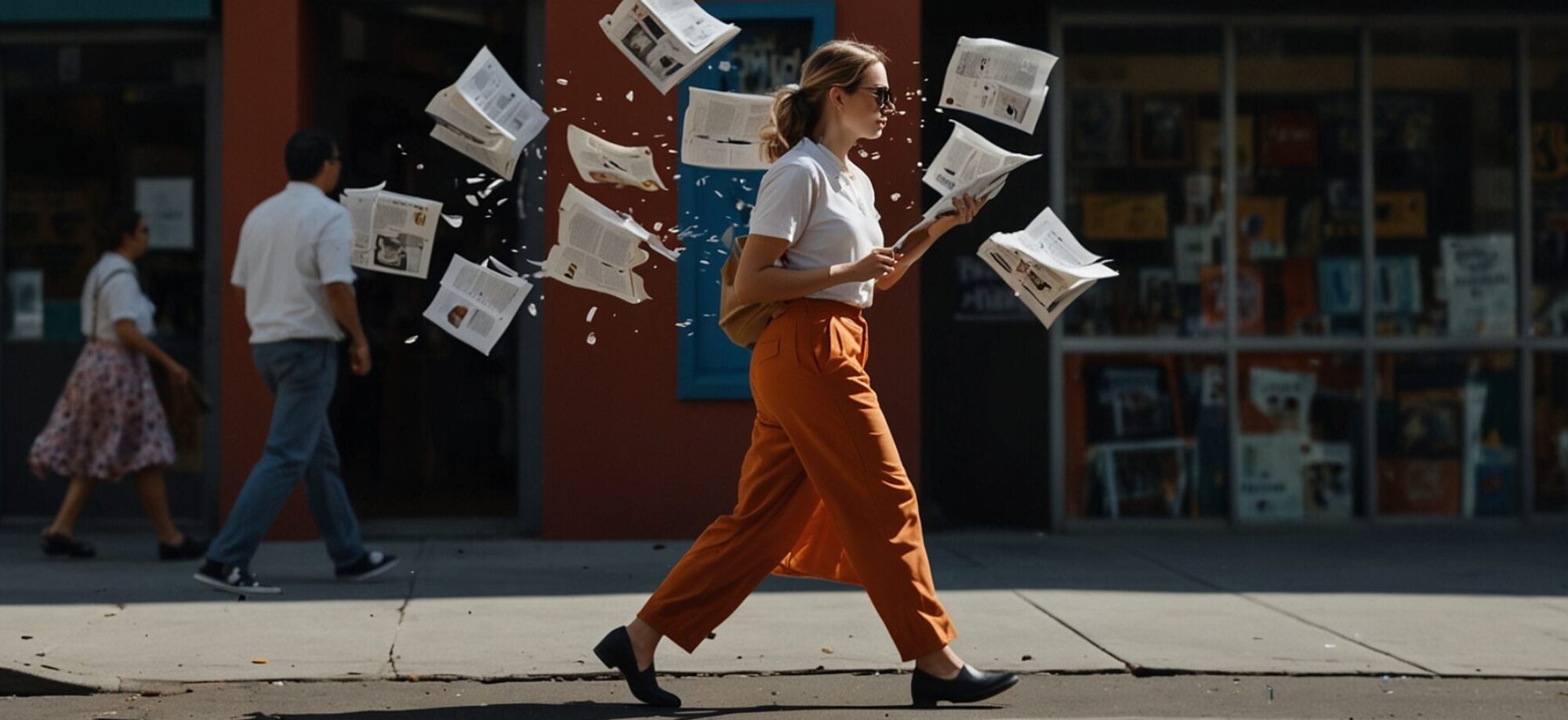
From number to form, from form to movement, from movement to feeling
WALKINGNAZCA: an invitation to walk through figures with the body in order to explore what sight alone cannot fully reveal.
We can explore what people feel when walking through the Nazca Lines and formulate hypotheses about what their creators might have experienced, but we cannot claim beforehand that we know their original feelings. This distinction in our objectives does not weaken the WALKINGNAZCA project; it lends it rigor and opens up a much more interesting field of research.
There are figures we can contemplate. There are figures we can draw. And there are figures we can walk through. When we walk along them, geometry is no longer merely in front of us: it begins to unfold within our experience.
I. A Question to Begin Walking
What can a person experience when they follow, with their own steps, the figure of an animal, a spiral, a straight line, a trapezoid, or a geometric configuration extending across the landscape?
The question seems simple, but it leads us into a field of research that we are only beginning to explore.
We are accustomed to observing figures from the outside. We contemplate them on a sheet of paper, on a screen, on an architectural plan, in an aerial photograph, or from an elevated position that allows us to appreciate their outlines. We learn to recognize their properties, name them, measure them, and classify them.
However, another possibility exists: to abandon, at least provisionally, the position of the observer and enter the figure.
Not with our eyes, but with our feet.
Follow its path. Walk along one of its sides. Change direction. Reach an intersection. Approach a center. Move away from it. Repeat a route. Retrace our steps. Discover that a distance requires time to travel and that a direction changes what we perceive along the way.
A different question then emerges, one that we do not usually ask when looking at a geometric figure.
We no longer ask only: What shape does it have?
We also ask:
What happens when I walk along it? What relationships do I discover as I travel through it? What do I experience when I temporarily become a moving part of its configuration?
These questions constitute one of the starting points of WALKINGNAZCA.
Our purpose is not to replace geometry with a subjective interpretation, but to explore an additional dimension of figures: the bodily experience that may arise from walking through them.
To begin this exploration, we propose revisiting an ancient structure of knowledge: the quadrivium.
And, building on it, experimenting with a new way of relating number, form, movement, and experience.
II. The Quadrivium: Four Paths of Knowledge
The word quadrivium comes from Latin and can be understood as “four paths.” (*) Historically, it referred to the set of four mathematical disciplines that, in the medieval educational tradition, followed the trivium: arithmetic, geometry, music, and astronomy.
Each discipline addressed a different dimension of the relationships that organize the world.
- Arithmetic: number considered in itself.
- Geometry: number and proportion in magnitudes and forms.
- Music: numerical relationships expressed through proportions, intervals, and sound harmonies.
- Astronomy: numerical relationships observed in celestial movements and cycles.
The quadrivium therefore provides an intellectual precedent for thinking that number is not limited to counting objects: it also allows us to study relationships, proportions, rhythms, and movements.
Historically, it was not conceived as a method for walking along figures. Nor do we have grounds for attributing to it an original theory of the sensations produced by such journeys.
(*) The Latin term quadrivium has two historically related meanings. In its original sense, it designates a place where four roads converge or intersect; later, in the medieval educational tradition, it came to refer to the set of four mathematical disciplines: arithmetic, geometry, music, and astronomy. The Spanish word cuadrivio retains the meaning of a crossroads of four roads. This dual meaning is especially significant for WALKINGNAZCA: on the one hand, the quadrivium represents an organization of knowledge; on the other, it evokes a space where four paths converge at a center. This second image allows us to establish a conceptual connection between the historical meaning of the word and our proposal to explore figures through walking. This dual meaning is supported by the Lewis and Short Latin Dictionary, which records both senses, and by the Infopédia Dictionary of the Portuguese Language, which defines quadrívio as the place where four roads converge or intersect.

But we can formulate a contemporary question based on its structure:
What would happen if we related the four dimensions of the quadrivium to the experience of physically walking through a configuration?
This question opens up a possibility.
Number can help us measure steps, distances, and durations. Geometry can define paths. Music can inspire us to study the rhythms of walking. Astronomy can remind us that every experience of a landscape takes place beneath a sky, at a particular moment, and within natural cycles.
We are not claiming that the historical quadrivium already contained our proposal. We are using its intellectual architecture as a starting point for building a contemporary instrument of exploration.
In WALKINGNAZCA, knowledge of a figure would not have to end once we have managed to describe it.
Another stage could begin when we decide to walk through it.
III. Our Quadrivium: A Proposal for WALKINGNAZCA
For the development of WALKINGNAZCA, we propose experimentally expanding the quadrivium through a relationship among four dimensions:
Number, form, movement, and feeling.
Number allows us to quantify.
Form allows us to recognize and organize spatial relationships.
Movement turns those relationships into a path that unfolds over time.
Feeling encompasses the bodily, perceptual, emotional, and cognitive experiences that may arise during the journey.
This adaptation is not a translation of the historical quadrivium, but an original proposal developed by WALKINGNAZCA.
We can express it as a sequence:
NUMBER → FORM → MOVEMENT → FEELING
And also as a research cycle:
FEELING → DESCRIBING → MEASURING → COMPARING → WALKING AGAIN
Why a cycle rather than just a sequence?
Because experience does not have to be the final result of a walk. It can become the starting point for the next one.
A person walks through a figure, describes what they experienced, compares their experience with that of others, and decides to modify the route. They change their speed, the direction from which they enter, the direction of travel, or the distance from which they approach the center.
Then they walk again.
The second experience may confirm an earlier observation, modify it, or reveal something that had gone unnoticed.
In this way, feeling ceases to be merely an impression that is difficult to communicate and also becomes an object of observation, description, and comparison.
This does not make it entirely measurable, nor does it deprive it of its personal character. What we do is create conditions for investigating it.
IV. The Quadrivium as Mantra and Yantra: Observing and Walking
Here we introduce one of the most suggestive ideas in this proposal.
We will use the words mantra and yantra as working analogies, inspired by their uses in different Indian traditions of thought, without claiming to reproduce their original religious or ritual meanings.
In our adaptation, the mantra will be a conceptual structure that we can contemplate and remember; the yantra will be a configuration that we can represent and walk through.
The first invites us to observe a relationship.
The second invites us to experience it through movement.
We do not claim that these two functions exhaust the traditional meanings of either term. We adopt them as imaginative tools for opening a new avenue of exploration.
1. The Mantra: The Figure Conceived and Observed
Imagine a cross formed by two perpendicular paths.
We can observe it from above. Recognize its center. Notice that its four arms point in different directions. Identify its relationships of perpendicularity and symmetry.
We can then associate four words with that figure:
Center. Direction. Intersection. Return.
We repeat them mentally as we observe the configuration.
This is not a magical formula or a claim about hidden effects. It is a way of focusing our attention on the relationships we want to explore.
In this sense, the WALKINGNAZCA mantra will be a verbal or conceptual structure that helps us direct our observation.
It may consist of four words, a question, a sequence of instructions, or a brief description of what we want to investigate.
For example:
I approach the center. I recognize the intersection. I choose a direction. I observe what changes.
The figure remains the same. What changes is the way we pay attention to it.
2. The Yantra: The Figure Walked Through
Now imagine that the same cross exists on the ground and that we can walk along its paths.
We start at the center and move toward one of its endpoints.
We return to the center.
We choose another arm and repeat the journey.
Finally, we walk from one endpoint toward the center and continue to the opposite endpoint.
The cross, which was previously a configuration we observed, becomes a sequence of actions.
The body experiences displacement, effort, duration, decisions, and the spatial reference points involved in walking.
In our proposal, the yantra is not merely a drawn figure. It is a figure whose structure can be experienced through a predefined route.
The same principle can be applied to a spiral, a trapezoid, a circle, a broken line, or an animal figure.
The mantra organizes attention; the yantra organizes the path. One invites us to look at relationships. The other invites us to walk through them.
Both can complement one another, although they do not necessarily have to produce the same experience or lead to a single interpretation.
V. The Cross: Four Directions and a Center
Let us begin with one of the simplest and most fruitful configurations: two straight lines that intersect perpendicularly.
The cross is an excellent initial laboratory because it allows us to study geometric relationships with few variables and an easily recognizable structure.
It has two axes, four arms, and an intersection point.
That point can serve as a reference for organizing numerous routes.
The First Route: From the Center Outward
We position ourselves at the intersection.
We choose one of the four arms and walk toward its endpoint.
We can pay attention to the distance traveled, the time taken, and the orientation of our body.
Then we return to the center and repeat the route along another arm.
Even when the distances are equal, the movements may feel different. The terrain, lighting, wind, slope, speed, acceleration at different moments, physical condition, and expectations of the person may all modify the experience.
The symmetry of the figure does not guarantee identical sensations.
This difference is precisely one of the questions WALKINGNAZCA can investigate.
The Second Route: From the Outside Toward the Center
Now we begin at an endpoint.
We walk toward the intersection and stop there.
We can observe whether approaching the center feels different from moving outward from it.
Then we repeat the experience from the other endpoints.
The return journey does not have to be psychologically identical to the outward journey. We know that we are returning, remember the route we have just traveled, and anticipate the destination.
The geometric path may be the same or similar to the previous one, while the temporal experience changes.
The Third Route: Crossing Through the Center
We begin at one endpoint and walk to the opposite endpoint, passing through the intersection.
Here, the center ceases to be a destination and becomes a transition.
We can stop there or cross it without interruption.
We can compare the two routes: stopping may turn the intersection into a deliberate event, while passing through it may cause attention to focus on the continuity of movement.
We are not claiming that everyone experiences these differences. We are identifying conditions that can be subjected to observation.
The Fourth Route: Changing Arms
From the center, we can turn ninety degrees and continue along another arm.
We can also make a series of ninety-degree turns, alternating among the four arms according to a predefined sequence.
In this case, perpendicularity ceases to be merely a mathematical property. It becomes a condition of movement: the body must change its orientation to follow the path.
We can record the number of turns, their direction, the elapsed time, and the ease or difficulty with which they are performed.
The figure begins to reveal something that does not appear in the same way when we observe it while standing still: its directional relationships become bodily decisions.
The Fifth Route: Returning to the Starting Point
We can walk along all four arms, returning to the center after each one.
Or we can follow a circuit connecting the endpoints through auxiliary paths, provided the design allows it.
We can also repeat the same arm several times and compare the first walk with the subsequent ones.
Does our attention change? Do we anticipate the end more accurately? Do we remember the distance more precisely? Does it become easier to maintain our direction?
These questions connect geometry, memory, learning, and movement.
What Does the Cross Teach Us?
The cross does not convey a universal feeling that we can deduce from its lines alone.
Instead, it offers a stable structure within which we can explore different experiences.
We can study the center as an origin or destination; direction as a choice; perpendicularity as a change in orientation; repetition as learning; and return as a comparison between what we remember and what we experience.
A simple figure thus becomes a set of experimental possibilities.
And, most importantly, these same possibilities can be incorporated into a digital system that guides routes and makes it possible to compare them.
VI. Center and Periphery: Two Ways to Begin
Any configuration with a recognizable center and a periphery can offer us two broad families of routes.
The first begins at the center and moves outward.
The second begins at the outside and moves toward the center.
These two operations may seem equivalent if we think exclusively about the distance between two points. But they are not equivalent from the standpoint of experience.
Walking from the Center
When we begin at the center, the starting point serves as a familiar reference.
We move away from it and can observe how our relationship with the configuration changes.
The distance from the center increases. Our perspective on the space may change. The path leads us toward a boundary, an endpoint, or a new reference point.
We can ask ourselves whether we remember where the center is, whether we can return without assistance, or whether the distance traveled changes our perception of the entire figure.
In a radial configuration, we can move outward in different directions and compare the routes.
Walking Toward the Center
When we begin at the periphery, the center becomes a goal.
We may see it from the beginning or discover it progressively, depending on the shape of the configuration and the conditions of observation.
The walk is then organized around an anticipated arrival.
We can compare the experience of approaching the center from different directions or examine how perception changes when the center is visible, marked on the ground, or defined only on the digital map.
The Center as a Bodily Reference
The geometric center does not necessarily coincide with the visual, topographic, or subjective center of an experience.
A figure may have a clearly defined mathematical center and yet present slopes, obstacles, terrain asymmetries, or environmental conditions that alter the walk.
For this reason, WALKINGNAZCA will distinguish among the calculated geometric center, the reference point used by the system, and the experience the person reports upon arrival.
This distinction will allow us to formulate more precise questions.
Are we walking toward a geometric point, a visible location, or a reference point we have learned to recognize?
The journey will allow us to investigate the differences.
VII. From the Quadrivium to the First Geometric Feelings
So far, we have discussed configurations, paths, and conditions of observation.
But our purpose does not end with describing movement. We want to explore the feelings that may arise when a person walks through a figure.
We use the word feeling in a broad sense. It may include bodily sensations, changes in attention, spatial impressions, emotions, memories, anticipations, and personal interpretations.
Not all these components are equivalent, nor must they occur together.
There is also no established correspondence that would allow us to claim, for example, that walking a spiral always produces introspection or that walking through a cross necessarily generates a feeling of balance.
What we can do is propose experiences, record responses, and compare the results.
Below are some initial scenarios.
1. The Straight Line: Continuity and Anticipation
Research question: How does the experience change when we maintain the same direction throughout a journey?
We can walk along a straight line of known length.
In a first trial, we move at our usual pace.
In a second, we maintain an approximately constant speed.
In a third, we divide the line into segments and briefly stop at each one (acceleration).
We can record the time, number of steps, pauses, changes in speed, and personal impressions.
The line has not changed, but the conditions of walking have.
Some people might describe continuity, monotony, concentration, calmness, or difficulty maintaining attention. Others might experience nothing particularly noteworthy.
The research begins when we accept both possibilities.
2. The Spiral: Moving Closer or Farther Away
Research question: What differences emerge when we follow a path that progressively brings us closer to a center or moves us farther away from it?
Imagine a spiral drawn on the ground.
We can walk from its outer endpoint toward the central region and, on another occasion, make the journey in the opposite direction.
We can compare the duration, number of turns, distance from the center, and changes in orientation.
We can also observe how our perception of the route changes as the spatial reference points change.
The spiral offers an opportunity to explore the relationship between a path and expectation.
If we know the design, we can anticipate that we will approach the center. If we do not know it, we may discover it as we walk.
There is no need to assign a universal meaning to the spiral. It is enough to investigate what changes between the two experiences.
3. The Trapezoid: Boundaries, Sides, and Transitions
Research question: How do we experience a figure whose sides have different lengths and orientations?
The trapezoid allows us to compare parallel sides, oblique sides, distances, and turns.
We can walk its entire perimeter or cross it using predefined diagonals.
When walking along the perimeter, we experience a succession of segments and changes in direction.
When following a diagonal, we connect two vertices without following the outline.
This comparison allows us to study how movement changes when we follow the boundaries of a figure or choose an interior path.
We can measure the segments, count the turns, and compare the duration of the journeys.
We can also ask whether a person perceives the longer and shorter sides differently.
4. The Circle: Continuity and Return
Research question: What do we experience when we follow a closed path and return to the starting point?
We walk around a circle until we complete one full revolution.
We can make a second circuit in the same direction and a third in the opposite direction, if conditions allow.
The endpoint geometrically coincides with the starting point. However, the person walking is not exactly the same observer who began: they now have the memory of a complete circuit.
We can compare the perception of distance, estimated time, and ease of anticipating the end of the route.
Returning allows us to investigate the relationship among repetition, memory, and orientation.
5. The Zigzag: The Experience of Changing Direction
Research question: How do successive changes of direction influence attention and the perception of a route?
A broken line requires us to alternate between segments and turns.
We can compare two paths of equal length: one straight and the other composed of segments that change direction.
Although the total distance may be similar, the second requires us to reorient our bodies repeatedly.
We can record the turns, pauses, and speed along each segment.
We can also ask whether a person remembers the straight segments or the turning points more clearly.
The configuration allows us to explore the relationship between spatial continuity and the effort required for orientation.
6. The Cross: Choice and Relationships Among Directions
Research question: What changes when we can choose among four directions that begin at the same point?
We can repeat the cross route using different instructions.
In the first experience, the system chooses the sequence of arms.
In the second, the person freely decides where to walk.
In the third, the person must complete all four arms without repeating any until all have been traversed.
These variations allow us to compare guided movement with self-directed movement, as well as to study route memory and decision-making.
The geometry offers the same set of directions. The way we walk through them changes the conditions of the experience.
7. The Concentric Figure: Distances and Relationships
Research question: How do we perceive the relationships between a central region and the regions surrounding it?
Imagine two or three concentric circles.
We can walk along each one, move between them along radii, or alternate between circular and straight routes.
The system can measure the distances between paths, the number of transitions, and the time taken.
The person can describe whether they perceive differences between remaining on a circular path and moving from one path to another.
An interesting possibility emerges here: experiencing a figure not only by following its outline, but also by relating its components.
8. The Symmetrical Figure: Similarity and Difference
Research question: What similarities and differences emerge when we walk through two symmetrical parts of a configuration?
We can divide a figure along an axis of symmetry and compare the corresponding routes on both sides.
If the paths have the same length, we can check whether they require similar amounts of time and whether they are experienced in similar ways.
We can also introduce a controlled variation: start from different points, change the direction of travel, or walk one part after resting.
Mathematical symmetry provides a precise reference for observing the differences that may arise during the experience.
In all these cases, the figure poses a question; the journey creates the conditions for exploring it; and feeling constitutes one of the responses we need to listen to, describe, and compare.
VIII. The Other Feeling: Walking Animal Figures (1)
So far, we have explored abstract geometric figures.
But WALKINGNAZCA has another major family of configurations: figures representing animals, birds, insects, and other living beings.
Here, the problem acquires an additional dimension.
When we observe the geoglyph of an animal, we recognize a figure that we interpret as the representation of a living being. We may identify a head, a body, limbs, wings, a tail, or a path that follows part of its silhouette.
However, recognizing an animal visually is one thing; walking along the configuration that represents it is quite another.
As we walk through it, we stop contemplating only the figure as a whole and begin to experience its parts as segments of a route.
Walking the Body of an Animal
Imagine an animal figure whose route allows us to distinguish the head, torso, limbs, and tail.
We can begin at the head and move toward the torso. Then we can walk along a limb, return to an intersection, and continue toward another part of the silhouette.
The system can indicate which segment we are walking and which one comes next.
The person can stop at designated points and describe their impressions.
Do they perceive differences between long and short segments? Can they easily recognize the continuity of the figure? Does their interpretation change when they walk the entire outline rather than traversing it in separate parts?
These questions do not presuppose that walking along the representation allows us to literally experience the animal’s feelings.
They allow us to investigate something different: how a person physically explores the spatial organization of a figure representing another living being.
The Other Feeling as an Exercise in Otherness
In our essay THE OTHER FEELING, the possibility of recognizing forms of sensitivity different from human sensitivity is a central question.
WALKINGNAZCA can contribute to exploring this question through a deliberate bodily experience.
We walk an animal figure, observe its proportions, and follow its paths. We try to imagine what it would be like to engage with the landscape from a different bodily organization, with different movement capabilities and different relationships with the environment.
But we must distinguish three levels.
The first is the actual experience of the person walking.
The second is the imagination of how a being with different bodily characteristics might relate to the landscape.
The third is the scientific knowledge available about that animal’s sensory and behavioral capabilities.
These three levels can inform one another, but they are not interchangeable.
Walking along the silhouette of a bird does not allow us to experience flight. Walking the figure of an insect does not reproduce its sensory capabilities. Nevertheless, the journey can serve as a starting point for asking questions about the differences among bodies, movements, and ways of perceiving the world.
Thus, the other feeling does not become a conclusion imposed on the user by the system. It becomes a possibility for exploration.
What If the Journey Changes Our Interpretation of the Figure?
Imagine that we first observe the complete geoglyph in an aerial representation.
Then we walk along its outline.
Finally, the system shows us the complete figure again and invites us to draw it from memory.
We can compare three results: the observed figure, the experience of walking it, and the remembered representation.
We may discover that some parts of the figure were easier to walk than to remember, or that certain changes of direction acquired greater importance during the journey.
The comparison may reveal differences among visual perception, bodily experience, and memory.
We do not need to claim that we know how the Nazca builders felt in order to find value in this research.
We need to formulate good questions, record the experiences, and respect the difference between our findings and our interpretations of the past.
IX. The Two Great Territories of WALKINGNAZCA
Based on the foregoing, we can define two major experimental families.
First Family: THE OTHER FEELING (1)
This family includes journeys along configurations that represent living beings.
Its main questions concern representation, otherness, bodily organization, and the imagination of other ways of relating to the landscape.
We will be able to study:
- The continuity of an animal figure’s outline.
- The relationships among its parts.
- The differences between walking along the perimeter and crossing particular segments.
- The influence of the direction and order of the journey.
- The differences among observing, walking, and remembering a figure.
- The imagination of forms of perception and movement that differ from human ones.
Second Family: THE FEELING OF GEOMETRIC FORM (2)
This family includes geometric configurations and spatial relationships that we can walk through.
Its questions concern direction, distance, proportion, symmetry, repetition, center, periphery, intersection, and return.
We will be able to study:
- The differences between straight and broken paths.
- The experience of approaching a center or moving away from it.
- Changes in orientation.
- The repetition of a path.
- The relationships between segments and complete figures.
- Anticipating a route and recognizing its endpoint.
- The differences between a figure’s mathematical properties and the experiences of those who walk through it.
Both families share one principle: transforming a spatial configuration into a bodily experience that can be described, investigated, and compared.
But they are not identical.
The animal figure invites us to explore the representation of a body different from our own. The geometric figure invites us to explore the spatial relationships that organize a configuration.
In both cases, walking provides us with an additional avenue of knowledge (3).
X. The Figure Does Not Determine a Single Feeling
We arrive at a fundamental statement for the development of WALKINGNAZCA:
Form does not determine a single experience. It contains a field of possible experiences.
This statement means that a figure may offer different routes and that each route may be experienced in different ways.
A straight line can be walked slowly or quickly. A spiral can be followed from the outside or from the inside. A cross can be traversed in a straight line or walked by making successive turns.
Furthermore, two people can follow exactly the same route and describe different experiences.
Even the same person may experience differences between two journeys undertaken on different days.
For this reason, WALKINGNAZCA should not assign a mandatory emotional meaning to each figure.
It should not claim that a particular shape necessarily produces calmness, fear, joy, introspection, or any specific sensation.
Its function would be different: to provide configurations, instructions, and walking conditions that allow each person to explore what happens during the journey.
The system can suggest questions. It can point out geometric relationships. It can record times and distances. It can compare routes.
But it should not decide in advance what the user is supposed to feel.
Feeling belongs to the person’s experience; the system helps create the conditions for observing and studying it.
XI. Walking, Space, Time, and Number
Walking through a figure brings together three dimensions that deserve special attention: space, time, and number.
This relationship allows us to establish a dialogue with the philosophy of Ernst Cassirer, particularly his reflections on symbolic forms and the ways in which human beings organize their experience of the world.
We do not need to attribute to Cassirer a theory of walking along geoglyphs. His thought can serve as a framework for formulating our own question: how are the space we travel through, the time we take, and the numerical relationships that describe our movement related?
Space
The space occupied by a figure can be described through points, segments, distances, angles, intersections, and proportions.
But when we walk through it, it also becomes a space of movement.
The starting point, the path we follow, the changes in direction, and the place where we arrive organize our experience.
Time
Every walk unfolds over an interval of time.
We can measure its duration, record pauses, compare speeds, and observe how the time taken changes when we modify the instructions.
A geometric figure does not need to change for the time required to walk through it to change.
Number
Number allows us to describe and compare routes.
We can record steps, distance, the number of turns, the number of intersections crossed, and the number of times we repeat a path.
We can also study proportions between segments and relationships between the time taken and the distance traveled.
The Combined Experience
Suppose we walk along two paths of equal length.
One is straight. The other contains numerous turns.
The distance may be identical, but the number of changes in direction will be different. The time taken may vary, and the bodily experience may not be the same.
If we repeat the experiment with several people, we can compare the results without assuming that their sensations must coincide.
An important possibility emerges here: using number to describe the conditions of an experience without reducing the entire experience to a figure.
Time and distance can be measured. Sensations can be described through words, drawings, narratives, or voluntary rating scales. Differences among participants can be analyzed without pretending that every human experience is quantifiable.
This combination of measurement and description can become one of the methodological foundations of WALKINGNAZCA.
XII. From the Nazca Desert to Any Landscape
So far, we have imagined journeys along simple figures and animal representations.
But WALKINGNAZCA originated from a question connected to an exceptional place: the territory of Nazca, in Peru.
The lines and geoglyphs of Nazca and Palpa constitute an archaeological heritage whose interpretation requires consideration of the available evidence and specialized research.
WALKINGNAZCA does not seek to replace those studies or offer a definitive explanation of the purposes of the people who created the figures.
It proposes investigating another, complementary question:
What can we learn today by physically walking through configurations similar to those we observe in the geoglyphs?
This question allows us to distinguish three areas of work.
1. Walking the Original Figures
When conservation conditions, regulations, and authorizations permit, an in-person experience could guide participants along legally authorized routes.
The application would have to respect archaeological restrictions, prevent damage to the heritage, and distinguish authorized paths from representations used for educational purposes.
Not all figures can or should be walked physically.
The possibility of walking an original configuration will depend on the specific conditions of the site and the corresponding authorizations.
2. Walking Similar Figures in Other Landscapes
We can reproduce certain geometric relationships in a different location.
A cross, spiral, trapezoid, or animal figure can be represented on an appropriate surface, provided that its dimensions and paths are precisely defined.
Users will be able to walk through them without having to travel to Nazca.
This possibility is particularly important because it broadens participation and allows experiences conducted in different regions to be compared.
The same configuration can be walked on flat terrain, in open spaces, or in installations designed for that purpose.
Differences in the surrounding environment will themselves become variables that need to be recorded.
3. Designing New Figures
WALKINGNAZCA will also be able to generate configurations that do not exist as historical geoglyphs.
It will be able to design new crosses, spirals, networks of paths, symmetrical figures, and geometric combinations.
It can also create original animal configurations, provided that these are clearly distinguished from documented archaeological geoglyphs.
These figures will serve to investigate specific questions.
For example, we could compare two spirals that differ only in the spacing between their turns, or two crosses of the same size but with different relative arm lengths.
The system will be able to guide users along both configurations and record their journeys.
In this way, WALKINGNAZCA will not depend exclusively on the possibility of visiting Nazca.
Nazca will be its historical and conceptual reference; the world’s landscapes will be its potential field of experimentation.
XIII. WALKINGNAZCA: From the Map to Guided Experience
Let us now imagine how WALKINGNAZCA might function as a digital model.
A person opens the application and finds two main entry points:
THE OTHER FEELING
THE FEELING OF GEOMETRIC FORM
The person chooses one and selects a figure.
It may be a documented configuration, an elementary geometric figure, or a new creation generated by the system.
The application presents the figure, explains its characteristics, and offers several possible routes.
The person chooses one.
From that moment on, the system is no longer merely a screen displaying an image. It becomes a guidance tool during the walk.
First Operation: Observe
The application presents the complete figure.
It identifies its main components, reference points, and the relationships relevant to the route.
For a cross, it can highlight the four arms and the center.
For a spiral, it can indicate the starting point and direction of travel.
For an animal, it can identify the main segments of its outline without imposing an emotional interpretation.
Second Operation: Choose a Route
The user selects a path.
They can walk from the center outward, from the outside toward the center, along the perimeter, or through a sequence of segments.
The system explains the instructions and displays the proposed route.
Third Operation: Find One’s Way
The application indicates the next direction, reference point, or segment to be traversed.
Depending on the available technical capabilities, it may rely on a map, a representation of the figure, spatial reference points, or positioning technologies.
Actual navigation on the ground will require verification of map and location accuracy. We must not assume that a phone can identify every point of a figure precisely in every environment.
For this reason, the application will need to distinguish between a reference route on a digital map and a verified position of the user.
Fourth Operation: Walk
The user follows the instructions at their own pace.
They can stop, continue, or abandon the route.
The application can record the data defined for the experiment: time, estimated distance, sequence of segments, pauses, or changes in direction.
The collection of personal or location data must be transparent and obtain the appropriate consent.
Fifth Operation: Describe the Feeling
At the end, the application invites the user to describe the experience.
It does not ask only whether they liked or disliked the journey.
It can ask which parts were easiest to remember, where they needed to change orientation, whether they correctly anticipated the route, or which bodily and perceptual impressions they wish to record.
Users can respond through text, voice, category selection, or a drawing.
They can also indicate that they experienced nothing noteworthy.
That response is just as valid as any other.
Sixth Operation: Compare
The application can display the completed route alongside the original design.
It can show the recorded times, distances, and changes in direction, as well as the observations the person has chosen to share.
In subsequent experiences, it can compare two routes through the same figure or two different configurations.
In this way, the application will help transform an isolated walk into an experience that can be reviewed.
WALKINGNAZCA will not simply show users where to walk. It will help them decide how to walk, what to observe along the way, and how to document their experience afterward.
XIV. A Cartography of Feelings
Over time, WALKINGNAZCA could assemble a collection of experiences associated with different figures and routes.
It would not be a catalog of emotions supposedly produced by each shape, but a cartography of experiences reported by participants.
Each record could contain:
- The figure walked and its geometry.
- The selected path.
- The direction and order of the journey.
- The distance and time taken.
- The general conditions of the terrain.
- Observations made during or after the walk.
- Drawings, narratives, or descriptions voluntarily contributed.
- Differences noticed when comparing successive journeys.
This information would allow us to formulate new questions.
Do people remember a figure better after walking through it than after observing it?
Do descriptions change when the same route is walked in opposite directions?
Does the ability to choose one’s route freely influence the attention given to the figure?
Are geometric configurations and animal figures described differently?
Do experiences conducted in different locations display similarities or differences worth investigating?
The answers must not be anticipated.
They will have to emerge from the journeys, the descriptions, and the analysis of the results.
It will also be important to distinguish between spontaneous observations, personal testimonies, and conclusions supported by systematic comparisons.
An individual experience can be valuable without constituting a general law.
A similarity among several participants can be interesting without proving that the figure caused it.
The cartography of feelings will be valuable precisely if it preserves these distinctions.
XV. The Memory of the Nazca Builders: An Open Question
We arrive at the most delicate historical question in our project, and at the same time, one of the most suggestive.
What did the people who designed, constructed, and walked through the Nazca configurations experience?
We cannot answer definitively on the basis of our own walks.
The geoglyphs belong to specific historical and cultural contexts. Their purposes and meanings must be investigated through archaeology, landscape studies, available sources, and the analysis of evidence.
It would not be correct to assume that their builders walked the figures exactly as we might today, or that they attributed the same meanings to each configuration that we might attribute to it.
Nevertheless, we can formulate a more cautious working hypothesis.
If a configuration was designed to be walked through, or if certain cultural practices involved walking along its paths, movement may have been part of some of the ways people related to it.
This possibility must be examined on a case-by-case basis rather than assumed to be established in advance.
WALKINGNAZCA can contribute to investigating the possibilities of this relationship between figure and movement, although it cannot, by itself, reconstruct the original experience of the ancient inhabitants of Nazca.
When we walk through a similar figure, we generate a contemporary experience.
That experience can help us formulate more precise questions about spatial organization, orientation, memory, and movement. It can also suggest hypotheses that must subsequently be tested against archaeological evidence.
But present-day experience is not direct evidence of what the builders felt.
This distinction is essential to the project.
We do not need to claim that we feel what the ancient inhabitants of Nazca felt. We need to explore what experiential possibilities a configuration contains and what new questions it allows us to formulate about it.
Imagination opens paths. Research establishes how far we can travel along them.
XVI. The Body as an Instrument of Knowledge
For centuries, geometry has developed extraordinary methods for representing and analyzing forms.
We can define points, lines, angles, surfaces, distances, and symmetry relationships with great precision.
WALKINGNAZCA does not seek to replace this knowledge.
It seeks to add a question: what happens when geometric relationships become conditions of our own movement?
The body is not a perfect measuring instrument. Our perception of distances may vary; we may lose our bearings, become tired, or interpret the same route differently.
But these limitations do not make bodily experience worthless.
They oblige us to distinguish between what we measure, what we perceive, and what we interpret.
A distance can be calculated geometrically. The duration of a journey can be measured with a clock. The sensation of effort can be described using a personal scale. The interpretation of a figure can be expressed in a narrative.
These are different kinds of records.
Relating them without confusing them may allow us to study aspects of experience that do not appear in a purely visual representation.
In this sense, walking through a figure is a form of bodily inquiry.
The journey poses questions through movement. The body responds through its capabilities, limitations, and perceptions. Subsequent reflection transforms that experience into a description we can examine.
The knowledge that emerges is neither exclusively geometric nor exclusively subjective.
It lies in the relationship among a spatial structure, a specific movement, and a person who experiences that movement.
XVII. From Feeling to Creation: Figures That Teach Us to Walk
WALKINGNAZCA does not have to be limited to walking through existing configurations.
It can also design them.
This possibility opens a new stage of the project: creating figures explicitly intended to explore particular spatial and bodily relationships.
Imagine an application that allows users to select simple parameters:
- A specific length for the segments.
- A specific number of turns.
- A relationship between the center and the periphery.
- A distance between parallel paths.
- A degree of symmetry.
- A number of intersections.
- A sequence of routes.
- An approximate duration for the experience.
Based on these conditions, the system could generate a figure and propose one or more ways to walk through it.
For example, we could create two configurations with the same total length but a different number of turns.
Or two symmetrical figures, one with a clearly marked center and the other without one.
Or two spirals whose paths differ only in the distance between their turns.
These comparisons would allow us to explore how the properties of a figure and the instructions for walking it influence the experience.
We could also create original animal figures composed of segments that allow for different routes.
The system would not need to assign them an emotional meaning. It would be enough to define their characteristics and offer questions to guide the exploration.
In this way, WALKINGNAZCA could become a digital laboratory of walkable configurations.
It would not merely display figures for us to observe: it would help us build figures that we can walk through and study.
XVIII. An Initial Method: Walking, Observing, Writing, and Drawing
To ensure that these ideas do not remain solely conceptual, we propose a simple procedure that can be carried out using an accessible geometric figure.
We can begin with a cross drawn in an authorized and safe space.
Before Walking
We observe the figure for a few minutes.
We identify its center, its four arms, and their directions.
We write down what we expect to find during the journey.
We can draw the cross from memory or briefly describe it.
During the Walk
We choose one of the routes proposed by WALKINGNAZCA.
We walk at our own pace, paying attention to changes in orientation and the relationship between our position and the center.
If the experiment permits, we repeat the route in the opposite direction.
There is no need to seek an extraordinary sensation. The absence of any particular impression is also a legitimate observation.
After Walking
We write a description of the experience.
We can record what we remember most easily, where we changed direction, whether we anticipated the endpoint, and what differences we noticed between the routes.
We then draw the figure and mark the places we consider relevant.
Finally, we compare the initial drawing with the later one.
When Repeating the Experiment
We undertake another route and compare the descriptions.
Have we noticed something new? Has our perception of the center changed? Do we remember the sequence better? Are the differences due to the figure, the instructions, the environment, or our own circumstances?
We will not always be able to identify the cause of a difference. But we can learn to formulate more precise questions.
This procedure integrates four fundamental actions:
WALKING. OBSERVING. WRITING. DRAWING.
Walking provides the experience. Observation directs our attention. Writing helps us articulate what we have experienced. Drawing allows us to represent and compare the spatial structure.
The result is not a definitive explanation of feeling, but a record that can inform the next exploration.
XIX. A Principle for Digital Navigation
Everything discussed so far leads to a practical idea.
WALKINGNAZCA must distinguish among the figure, the path, and the experience.
The figure is the spatial configuration we wish to explore.
The path is the specific route the user will follow through it.
The experience is what happens when that person follows the path under particular conditions.
These three dimensions are related, but they are not identical.
A single figure may contain multiple paths.
The same path may be walked at different speeds or in different directions.
The same walk may generate different experiences in different people, or in the same person at different times.
Therefore, the system must allow design decisions to be separated from users’ observations.
In practice, this means that each figure can have several routes, and each route can incorporate instructions, reference points, and observation questions.
It also means that the system must not confuse the route it recommends with the route the user actually followed.
If the application records a deviation, it must treat it as data about the journey, not as a sensation or interpretation.
Similarly, if the user describes a personal impression, the system must preserve it as a personal account without automatically turning it into a property of the figure.
This separation will facilitate both individual experience and subsequent analysis.
Navigation will guide movement. Recording will describe what happened. Research will seek to understand the relationships between the two.
XX. Toward a New Way of Reading the Landscape
Until now, we have learned to read maps, plans, diagrams, and representations of the landscape.
WALKINGNAZCA invites us to try a complementary way of reading.
Instead of limiting ourselves to identifying the shapes that appear in an image, we can follow their paths with our own steps.
Instead of observing only the relationships between the points of a figure, we can experience the distances that separate them.
Instead of studying angles alone, we can record the turns we need to make.
Instead of treating the center as an abstract property, we can walk toward it, move away from it, and return.
Instead of contemplating an animal figure exclusively as a visual representation, we can walk through its spatial organization and ask what that experience reveals about the way we recognize other bodies.
This way of reading does not replace the others.
It complements them.
The map retains its usefulness. Geometry maintains its rigor. Archaeology remains indispensable for studying the historical contexts of the geoglyphs.
But an additional possibility emerges: reading the landscape through the relationship between a figure, a path, and a body in motion.
The landscape can then become a surface for exploration, provided that we move through it with respect for its physical conditions, its inhabitants, and its heritage.
We do not need to walk over every archaeological remnant to develop this idea. We can begin with digital configurations, authorized reproductions, and spaces designed for experimentation.
What matters is not walking at any cost.
What matters is learning to formulate questions through walking.
XXI. The Beginning of WALKINGNAZCA
Let us return to the quadrivium.
In its historical tradition, four mathematical disciplines made it possible to organize a significant part of knowledge about number, form, sound relationships, and celestial movements.
We have taken that structure as our starting point to propose a different kind of exploration.
Number, form, movement, and feeling constitute the four dimensions of our experimental quadrivium.
The mantra helps us organize our attention.
The yantra allows us to imagine the figure as a path that can be walked.
The cross teaches us that a simple configuration can offer multiple routes.
The center and the periphery allow us to compare two ways of beginning and ending a walk.
Spirals, trapezoids, circles, and symmetrical figures expand the possibilities.
Animal geoglyphs invite us to explore representations of other living beings and to formulate questions about otherness.
The relationship among space, time, and number allows us to describe routes more precisely.
Writing and drawing help us document experiences.
And the digital system can bring these elements together to guide, record, and compare walks.
All of this constitutes an initial proposal. Its value will depend on our ability to turn ideas into concrete routes, test how they work, and learn from the real experiences of participants.
WALKINGNAZCA does not need to promise a revelation to be interesting.
It can begin with something simpler and, at the same time, more fertile: a figure, a route, and a question.
What changes when we stop observing a shape from the outside and begin to walk through it?
What do we discover when space becomes a path?
What do we remember after walking?
What differences emerge between our experience and that of other people?
What new questions can we formulate about the figures of Nazca when we also study them through bodily experience?
These questions do not all have to be resolved at once.
They can become WALKINGNAZCA’s work program.
A program in which each journey helps improve the next, in which each figure can offer different possibilities for exploration, and in which personal experiences are documented without being confused with historical explanations that have not yet been demonstrated.
The project will begin to function when a person can choose a figure, receive clear guidance, walk a path, and record what they experienced.
From that moment on, the proposal will cease to be merely an idea.
It will become a practice.
And that practice can develop in Nazca, in other landscapes, or in spaces specifically designed to explore the relationships between geometry and movement.
Because figures do not have to remain confined to the images that represent them.
They can become paths.
And paths can become questions that we learn to formulate with our own steps.
XXII. A Final Invitation: Walking to Know
Finally, imagine a person standing before a cross traced on the ground.
They do not need to know the entire history of the quadrivium.
They do not need to master advanced geometry.
Nor do they need to wait for an extraordinary sensation to appear.
They only need to observe the figure, choose a route, and begin walking.
They move from the center toward one of its endpoints.
They return.
They change direction.
They cross the intersection.
They stop again.
Then they describe what they observed and draw the path they have just followed.
Perhaps they discover something about their orientation. Perhaps they notice a difference between walking toward a point and moving away from it. Perhaps they remember a path better after having walked it. Perhaps they identify no significant difference.
Any of these results can be the beginning of an investigation.
Afterward, that person can walk a spiral, a trapezoid, or an animal figure. They can compare two paths, repeat a route, or design a configuration of their own.
Over time, they may discover that a single figure allows for multiple experiences and that walking through it is a way of relating to it that goes beyond visual observation.
They will not necessarily have discovered the feelings of those who built the Nazca geoglyphs.
They will have discovered something equally worthy of study: the possibilities and limitations of their own experience when walking through a spatial configuration.
And they will have helped build a methodology that other people can test.
That is the beginning we propose.
Not a system that tells its users what they should feel, but a system that allows them to explore, describe, and compare their experiences.
Not a definitive explanation of the Nazca figures, but a new way to formulate questions about them.
Not a replacement for archaeological or geometric knowledge, but an invitation to relate that knowledge to bodily movement.
The quadrivium has provided us with an intellectual starting point.
The mantra and the yantra have offered us two complementary images: observing the figure and walking through it.
The cross has allowed us to discover the multiplicity of routes contained in a simple configuration.
Animal and geometric figures have opened up two major territories for exploration.
Now it is time to turn these ideas into routes that can be experienced, documented, and improved.
WALKINGNAZCA begins when a figure ceases to be merely something we see and becomes something we can walk through.
And it also begins when, after walking through it, we dare to formulate a new question.
Because there may be knowledge we can acquire by looking.
Other knowledge, by measuring.
Other knowledge, by reading.
And still other knowledge that we can only begin to explore when we set out on a path.
WALKINGNAZCA: walking through figures, exploring their relationships, and discovering the feelings that may arise as we traverse them.
Form does not determine a single experience. It contains a field of possible experiences.
And every walker can help us discover part of that field.
Steps we will take starting with this publication.
This post should serve as the first conceptual effort of WALKINGNAZCA. To give it practical continuity, three editorial elements are proposed.

1. A cover image
A composition that combines a geometric figure (like the one shown) drawn on the desert, the footprint of a route, and a person walking. The image should suggest investigation and movement, without presenting speculative interpretations as if they were archaeological findings.

2. A map of the initial routes
A sheet with six initial configurations: straight line, orthogonal cross, spiral, trapezoid, circle, and symmetrical figure (like the one shown). Each would show the starting point, the direction of travel, the center (if one exists), and alternative routes.

3. The first WALKINGNAZCA experiment
Begin with the orthogonal cross (like the one shown). Design two guided tours—one from the center outwards and one from the outside inwards—and ask participants to describe their experiences. This would be a first concrete test of the digital model, before developing more complex tours.
My initial plan is for the first digital prototype to be very simple. There’s no need to immediately develop a complex system that covers all the geoglyphs. We need to demonstrate that a person can select a figure, follow a route, record their experience, and compare the results.
This first experiment would allow us to begin transforming the philosophical idea into an operational methodology and, subsequently, expand WALKINGNAZCA into the two main categories we’ve defined: THE OTHER FEELING and THE FEELING OF GEOMETRIC FORM.
The project’s ambition is enormous. Its first test, however, must be small, clear, and verifiable.
(1) Loya Lopategui, Carlos, The Other Feeling, EMULISA, Mexico, 2026. Available on Amazon, Kindle Edition: https://www.amazon.com/dp/B0HN329JLV

(2) Loya Lopategui, Carlos, El Sentir de la Forma Geométrica, EMULISA, Mexico, 2026. Available on Amazon, Kindle Edition:

(3) Loya Lopategui, Carlos, El Camino como Libro, EMULISA, Mexico, 2026. Available on Amazon, Kindle Edition: