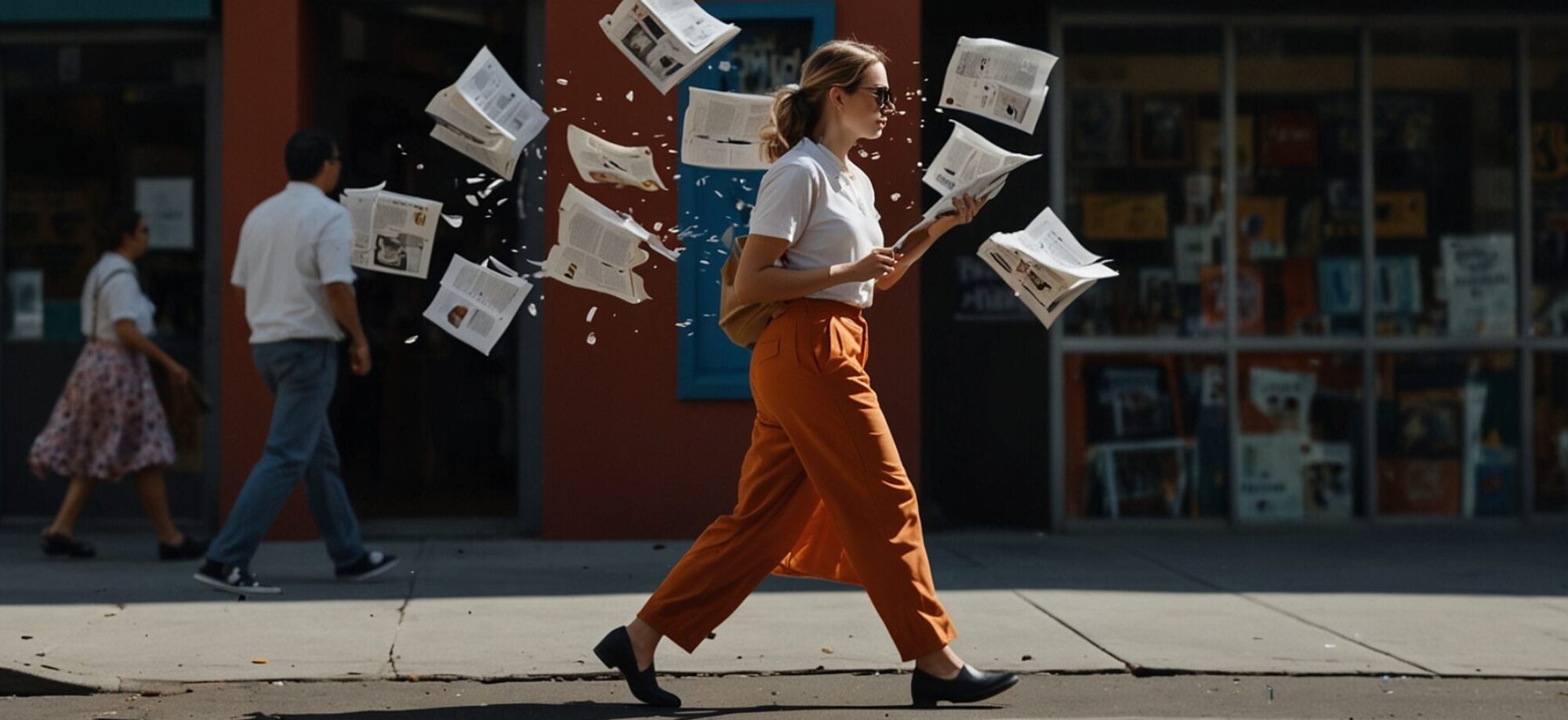
“Every move is a choice, every choice is a destination, and every destination is just a new beginning”.
On the board of life, as in chess, every step we take brings us closer to a new possibility. We walk between invisible squares, between decisions that seem minor but that, in their accumulation, determine our destiny.
The novel Chaturanga: Ludus Aeternus (1) reminds us that life itself is a game of strategy, movement, and transformation. Inspired by the ancient game of Chaturanga, the precursor of modern chess, this story immerses us in a world where each piece has a role, each move a meaning and each sacrifice a lesson.
But what does this have to do with walking? Everything.
Chess: A Game of Walkers
If we look closely, all the chess pieces walk:
• The Pawn advances with patience and determination, reminding us that the longest journey begins with a single step.
• The Knight teaches us that sometimes moving forward requires moving in zigzags, leaving the straight line and exploring other angles.
• The Queen walks with power and freedom, dominating the board with the confidence of someone who has traveled many roads.
• The Bishop advances diagonally, finding hidden paths that others do not see, like someone who follows less-traveled paths in life.
• Even the King, limited in his movement, continues to advance until the last moment.
• The Rook seems rigid in its walk, but if we look back, in the original Chaturanga it was not a stone tower: it was an elephant, a symbol of strength and endurance in walking.
Just as the pieces move on the board, we advance on the board of life. Every day is a move, every decision a movement, and every step a conquest.
Walking: Strategy and Discovery
The act of walking is a perfect metaphor for chess: it requires attention, strategy, and adaptation. It’s not just about moving, it’s about advancing with intention. Walking forces us to observe our surroundings, to calculate distances, to modify our route according to the terrain or circumstances.
Just like in chess, when we walk we learn to:
✅ Be patient, like the Pawn, moving forward steadily.
✅ Be unpredictable, like the Knight, daring to take alternative paths.
✅ Be strategic, like the Queen, choosing when to speed up and when to stop.
✅ Be resilient, like the King, understanding that the game is not over until the last move.
Ludus Aeternus: The Path Has No End
The novel Chaturanga: Ludus Aeternus shows us that the game never really ends. Each ending is a new beginning. And the same goes for walking: we never stop learning, exploring, moving forward.
Soon, in addition to the book, you will be able to enjoy an animated short film based on this story, which will bring this metaphor to the screen with images and symbolism that invite reflection.
For now, keep moving forward. Because life, like chess, is a game of walkers.
We have already mentioned that walks should be done in a natural and normal way, however, on this occasion I would like to incorporate certain elements of coordination and thought to perform these 6 exercises inspired by the way chess pieces “walk”. Some of them should be done by making some – small – alterations in our natural walk.
I will briefly try to outline, through diagrams, how we should walk following the guidelines and rules of the chess pieces.
GENERAL
All pieces except the knight move in a straight line, either horizontally, vertically or diagonally. The edge of the chessboard cannot be crossed. No piece except the knight can jump over another piece to move. A move cannot end on a square occupied by a piece of the same color.
PAWN
A pawn moves vertically along the column it is on, without being able to move backwards. On the first move, from the starting point, it can move forward two squares and from there, one square at a time.
To capture a piece, a pawn must move one square diagonally forward, either to the left or to the right. It cannot capture in a straight line, unlike how it moves without capturing.
A pawn cannot move backwards.

BISHOP
The bishop moves diagonally, both up and down, and can move any number of squares in a single move, as long as there are no other pieces blocking its path.

KNIGHT
The knight in chess moves in an “L” shape, advancing two squares in one direction (horizontally or vertically) and then one square perpendicularly, or vice versa, and is the only piece that can jump over other pieces.

ROOK OR TOWER
The rook in chess moves in a straight line, both horizontally and vertically, along any number of unoccupied squares, that is, it can move any number of squares in a single move, as long as there are no other pieces blocking its path. It cannot jump over other pieces.

KING
The king moves one square in any direction (horizontally, vertically, or diagonally) and can capture enemy pieces in the same way.

QUEEN
The queen moves any number of squares in a straight line, both horizontally and vertically (like the rook), and diagonally (like the bishop), without jumping over other pieces. It can move any number of squares in a single move, as long as there are no other pieces blocking its path.

This post is closely related to several of the posts dealing with the “physical body”, explaining and applying the concepts of symmetry, rhythm, cadence, beat, and harmony.
All of these chess “sequences” mentioned and illustrated must be performed while walking in a safe and comfortable manner, although some of them have a certain degree of difficulty, which will precisely impact some of the senses, both internal and external, and some alterations regarding body parts, so they must be performed carefully; that is, while these exercises are being performed, the arms, hands and senses – mainly sight (eyes) and orientation – are put into motion, assigning them certain additional efforts, which can affect the proprioceptive capacity of the person performing them.
With these analogical exercises I intend for you to have a renewing experience, which is achieved through the change in attention and the way of walking. We have already mentioned on other occasions that the symbolism of walking is to abstract from external conditioning, to let thoughts flow towards the inner self, achieving this analogy with the 6 chess pieces that have walked for millennia.
In order to underline these benefits in one of our external senses, hearing, and according to my experience, when we make some movements out of the ordinary, as these conformities can be considered, we certainly activate the vestibular system sending signals to the brain to recover (or maintain) balance. With age it becomes more difficult to maintain or recover balance because the small organs of the ear harden. The degree or intensity of this type of movements is what must be taken into account so that these “chess-like” exercises are applied safely and effectively, while we walk.
General procedures for walking in a chess-like manner
The first thing we need to know is that we can do these ways of walking however we like. The results will not vary much. It is not necessary to have a square on which to walk. Each step we take will be equivalent to one square on the board.
“Pawn” Walk
Looking at the diagram above, we see that there are only 3 possibilities. Walking forward with one or two steps. If it is with a single step, with the right foot –for example- you can synchronize it by joining it with the left. Stopping.
Walking to the right or left, results in an identical way: We can do it in 2 ways: Turning our body completely 45 degrees and walking forward. Continuing in the same way as in the first case. The other way is to walk diagonally, forcing our body to do it in an asymmetrical way.
“Rook” Walk
Looking at the diagram above, we see that there are only 4 possibilities. 1) Walking forward with one or more steps; 2) Walking backwards. This can be done in two ways, turning the whole body 180 degrees, and walking forward, and walking backwards; 3) Walk to the right, and this has two possibilities: walk sideways, or turn your whole body 90 degrees, and walk forward; 4) Walk to the left, and this has two possibilities: walk sideways, or turn your whole body 90 degrees, and walk forward.
“Knight” Walk
Looking at the respective diagram we see that there are only 8 possibilities. 1 and 2) “Front” position: it is done in the same way for the left as for the right, maintaining the respective orientation. Two steps forward and one step to the right are taken, turning the body 90 degrees or not, or turning it to the side. 3 and 4) “Right” position: it is done by turning the whole body 90 degrees to the right and repeating the “front” position, or it can be done sideways. 5 and 6) “Left” position: it is done by turning the whole body 90 degrees to the left and repeating the “front” position, or it can be done sideways. 7 and 8) “Back” position: This walk can be done completely backwards, or it can be done by turning the whole body 180 degrees, and repeating the “front” position.
“Bishop” Walk
Looking at the respective diagram we see that there are only 4 possibilities. Walking asymmetrically following a diagonal at 45 degrees, or turning the whole body 45 degrees and walking forward. The other possibilities can be done by walking backwards, or turning the whole body as necessary to walk forward.
“Queen” Walk
This can be done in 8 different ways. Either forward, sideways, diagonally or backwards.
“King” Walk
This can be done in 8 different ways just like the “Queen” Walk but only one step at a time. Either forward, sideways, diagonally or backwards.
All steps can be performed without having to immediately perform the second step. If it is a single step, with the right foot –for example- you can synchronize it by joining it with the left foot. You pause and perform the next step in the same way. Keep in mind that this rhythm is set by our body.
Measure (Compass) 1: Right step, left step, right step, and right step reaches it. And the rhythm restarts.
Measure (Compass) 2: Right step, then left step, and right step reaches it. And the rhythm restarts.
Measure (Compass) 3: Right step, left step, right step, left step, and right step reaches it. And the rhythm restarts.
Measure (Compass) 4: Right step, left step, right step, left step, and right step reaches it. And the rhythm restarts.
And so on. Choose the rhythm that is natural for each of us.
Let’s organize our walks by incorporating some movement of the chess pieces. The results are immediate, because apart from walking we become more interested in what chess is and has been in the history of humanity.
(1) I invite you to take a walk through the pages of my novel, entitled: Chaturanga: Ludus Aeternus. Available on Amazon, Kindle Edition: https://www.amazon.com/dp/B0GNLCB6GW