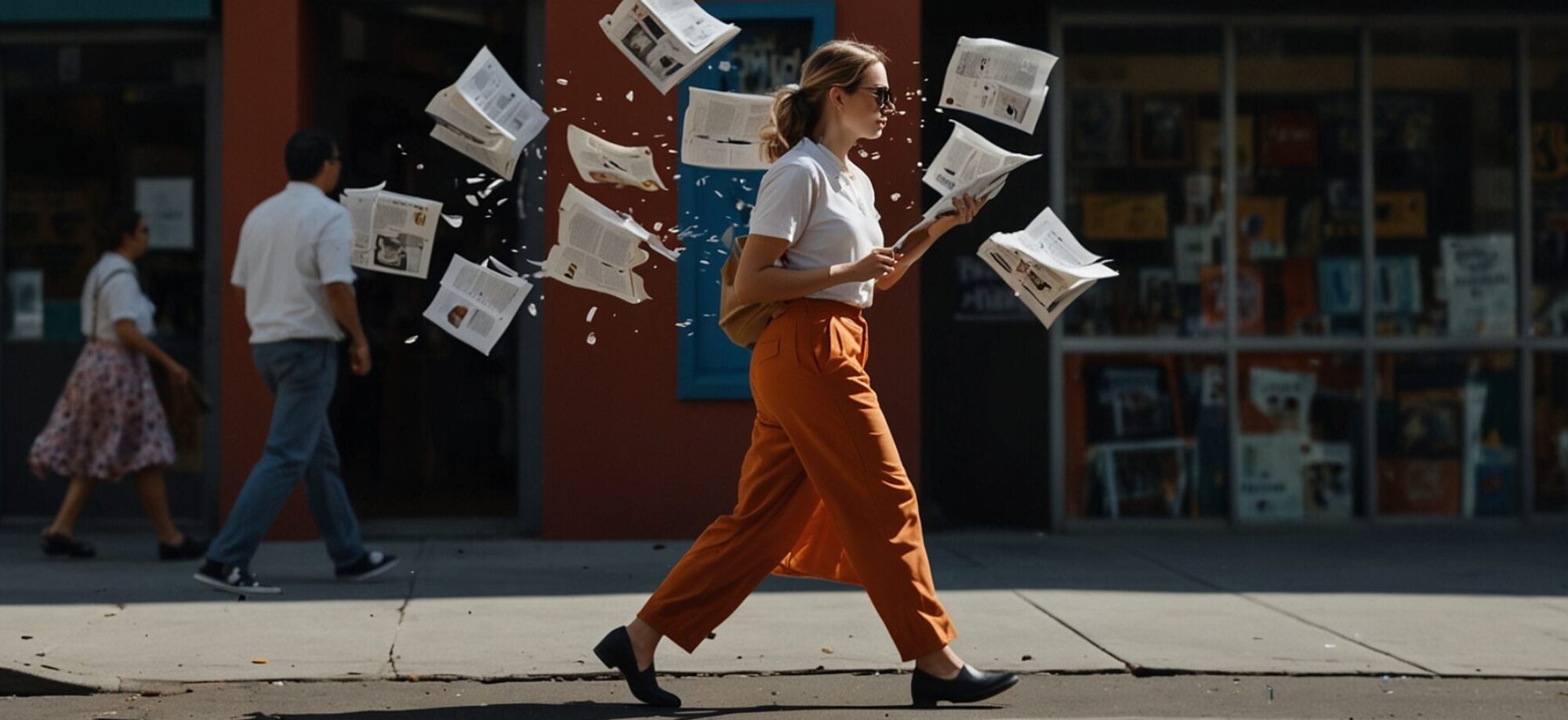
The sun is barely up, and the air still holds that freshness you only feel in the early morning. A man leaves his house, with no phone in hand or headphones in his ears. He only has his steps. The crunch of leaves under his feet, the timid song of the birds and the faint scent of damp earth make up his first conversation of the day. He isn’t going anywhere in particular. He walks… and in that walking, the world begins to order itself.
In this world that’s moving at full speed, where every minute seems scheduled, walking has become a luxury… and a forgotten necessity. However, this ancient act, which our ancestors practiced as a natural part of their existence, remains the most powerful tool to transform our body, mind and spirit.
Walking doesn’t require gyms, special clothes or schedules. Just a pair of willing feet and the desire to move. It’s the most democratic exercise: young, old and everyone in between can do it—in the city, in the country, or at the beach; alone or with company.
In a time when everything seems to move at a speed that leaves us breathless, the essay “Walking: from a Physical Act to a Philosophical Act” (1) reminds us of something essential: walking isn’t just about moving from one point to another; it’s an opportunity to think, feel, and live with more awareness.
More Than an Exercise: A Paradigm Shift
For centuries, walking was a tool for survival, a way to get to places, work the land, or explore territories. But in both Eastern and Western philosophy, it always had a deeper meaning. Aristotle taught while walking in the Lyceum ((Posts ARISTOTLE AND HIS SPEECHES DURING HIS PERIPATHETIC WALKS; WALKING AND PERIPATHETICS), Zen monks turn it into walking meditation (Post THE WALK-RWD SYSTEM AND ZEN), and Nietzsche found the spark for his boldest ideas on his long walks (Posts futuros NIETZSCHE Y LOS GRIEGOS EN EL CAMINAR; NIETZSCHE Y LA INTELIGENCIA ARTIFICIAL).
This book proposes to reclaim that heritage and take it a step further: to see walking as a philosophical and ethical practice capable of transforming the way we live in the world. Walking is an act that involves the body, mind and spirit, allowing us to reconnect with what is essential amid the daily noise.

Four Dimensions to Rediscover the Act of Walking
The essay invites us to explore four major forms of walking in contemporary life:
- Meditation in Motion: Allowing the rhythm of your steps to set the pace for your thoughts. Each breath accompanies a step; each step becomes presence. Walking this way calms the mind and opens space for creative and meditative thought, as well as new ideas.
- The Philosophy of Walking: Thinking doesn’t always have to happen while sitting at a desk. When you walk, the mind is freed, ideas flow, and connections appear effortlessly. Great writers, scientists and philosophers have found their best thoughts on a trail, not sitting in front of a blank page.
- Resistance to the Culture of Speed: In a society that pushes us to rush, walking is a formal and precise act of rebellion. Walking is choosing a human pace; it’s allowing time to expand, and it’s observing what rushing doesn’t let us see.
- Ecophilosophy and Connection with Nature: When you walk, your body merges with its surroundings. You learn to look at the sky, feel the wind and hear the sounds of the world. And that direct contact reminds us that we are not the masters of nature but a part of it.
A Legacy of Steps and Thoughts
The essay explores the teachings of thinkers like Husserl, Heidegger, Merleau-Ponty, Camus, Sartre, Simone de Beauvoir, Deleuze, and Nietzsche, along with the insights of Taoism, Zen and Samurai philosophy. Each offers a unique perspective, but all agree on one thing: walking transforms. It doesn’t just change the person walking but also the way that walker “Makes World.”
Every step is a silent dialogue with your body. Your breathing synchronizes, your heart beats with controlled strength, and your muscles awaken. And all the while, your mind clears. Walking allows you to think better, observe with attention and reconnect with what truly matters.
The simple act of putting one foot in front of the other can become a statement of principles. A path can be a straight line on the ground, but also a route toward a more conscious, free, and creative life.
A Step Toward Yourself
If you have a pair of feet and a small stretch of ground, you have everything you need to start. You don’t need special clothes or advanced technology. All it takes is the decision to go out and move. The reward will be a more alive body, a more alert mind, and a more open heart.
But it’s not just about physical health. Someone who walks opens the door to a new perception of the world: they discover invisible corners, sounds that daily noise hides, and nuances that rushing erases. Walking is also a form of resistance against the acceleration that steals our presence.
Walking is the most accessible of journeys, but it can also be the deepest. Each step is an opportunity to ask yourself: What am I thinking? What am I feeling? Where do I want to go, not just on this path, but in my life? By walking, the answers will come on their own.
Today, more than ever, we need that stretch of road to think, feel and reconnect. Walking is a reminder that time belongs to us, that we can define our own rhythm (Post RHYTHM, COMPASS AND CADENCE IN OUR WALKING; ENJOYING OUR PERCUSSIVE MUSICAL WALKING), and return to what’s natural and healthy.
That’s why, more than an exercise, walking is a commitment to yourself. It’s a ritual that can change your day and, little by little, your entire life.
The invitation is simple: take your first step today. It doesn’t matter if it’s for five minutes or half an hour. The important thing is to begin. The rest will come on its own, step by step.
Don’t wait to have free time to walk. Walk to find it. (Posts THE WALK AND THE LACK OF TIME. PART I; WALKING AND FREE TIME. PART II). Because, in the end, it’s not about how many steps you take… but how much life you put into each step.
(1) Loya Lopategui, Carlos, Walking: from Phisical Act to Philosophical Act, EMULISA, México, 2005. Available on Amazon, Kindle Edition: https://www.amazon.com/dp/B0FNRZCKXL