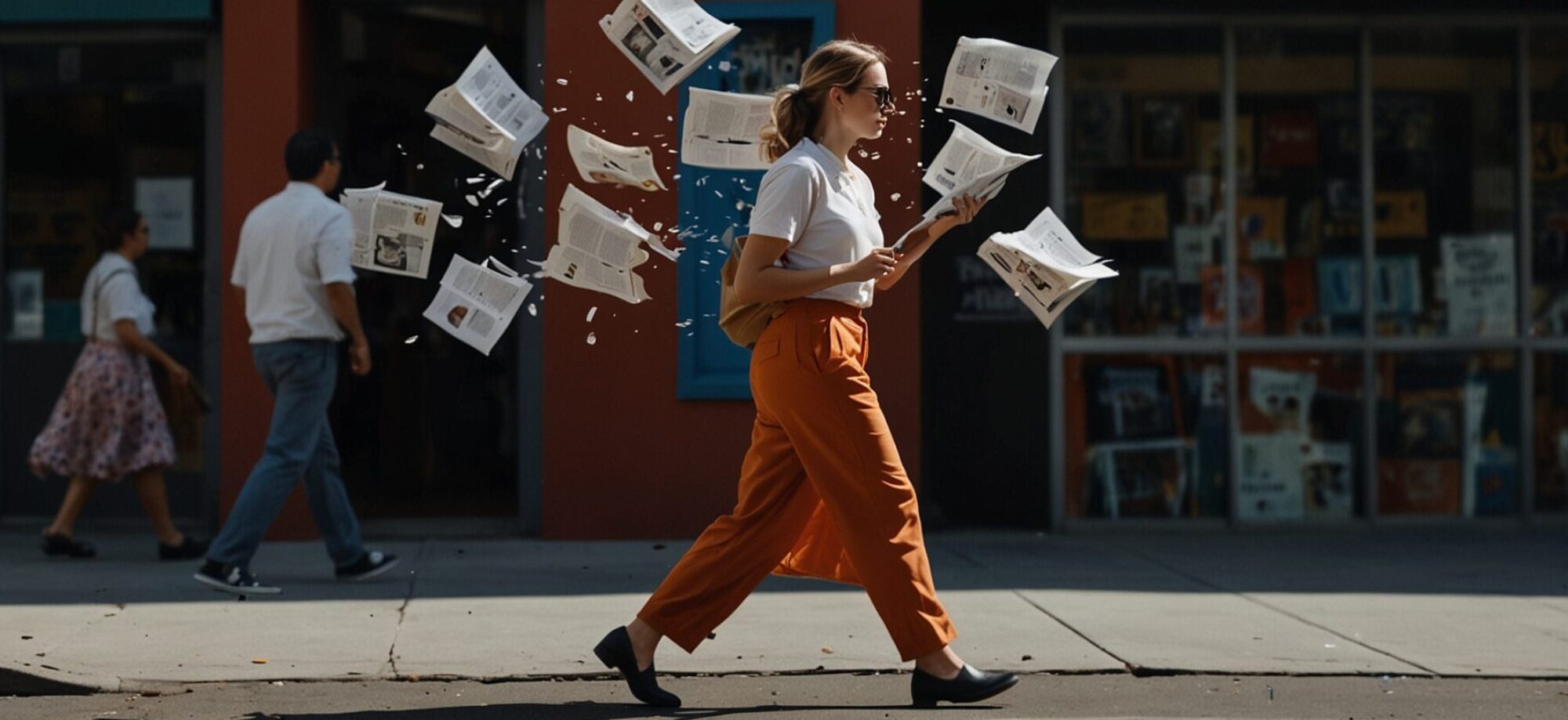
An exercise in symbolic evocation to reconcile the body with the SELF through the act of walking.
«I am not here to remain immobile.
I am here to be read with your feet.»
—The Symbol
This story belongs to the universe of THE WALKER AND HIS SHADOW: MYTH OF A NOMADIC TOWER (1), specifically section 2.5. The Symbol in Constant Motion.
It is part of the Literary and Interactive Interludes, small experiences born from walking and created to remind us that human imagination was not born within academic walls.
Long before classrooms, human beings had already invented other ways of learning:
walking,
observing,
repeating,
imitating,
narrating,
drawing,
dancing,
keeping silent,
and turning that which they did not understand into symbols.
This is one of those rituals.
You don’t need to believe in it.
You only need to walk.
[1] THE AWAKENING OF THE WALKER
On an ordinary morning —like all mornings, and yet completely different— the Walker left his house.
He had no goal.
He had not prepared a route.
He was not seeking to reach a specific distance.
Something inside him, a nameless restlessness, asked for movement.
And he walked.
First, along the usual street.
Then he took a turn.
Then another.
He didn’t know exactly why.
He simply wanted to discover what lay beyond his known paths.
After a while, he reached a path flanked by ancient trees.
There, he found a stone.
It was a small stone.
Irregular.
Grey.
There was nothing extraordinary about it.
And yet, the Walker stopped.
He didn’t know why.
He observed it.
He circled it.
He crouched down.
He touched it.
And then, something strange happened.
The stone spoke.
Not with a voice.
Not with words.
It spoke with the kind of language that emerges before words.
The Walker listened.
—Who are you? —he asked.
The stone remained motionless.
But it replied:
—I am a symbol.
The Walker smiled.
—Stones don’t talk.
—Then why are you listening to me?
The Walker fell silent.
The stone continued:
—I am not a symbol because I have a universal meaning. I am a symbol because you have decided to stop before me.
The Walker looked at the stone again.
—Then, is the symbol you or is it me?
—That is a good question.

[2] THE LANGUAGE OF THE UNSPOKEN
The Walker stood up again.
—Why have you called me?
—I didn’t call you.
—Then why did I stop?
—That is for you to discover.
The Walker began to walk slowly around the stone.
—And how am I supposed to discover it?
—By walking.
—That is too easy.
—Important things usually seem easy after they have been understood.
The Walker continued walking.
The stone remained behind.
But after a few meters, he felt that something had changed.
The stone was no longer in front of him.
Now it was inside a question.
—Why do you walk? —asked the symbol.
The Walker took a moment to reply.
—Before, I walked to arrive.
—And now?
—Now I walk so as not to stay in the same place for too long.
—What place?
The Walker thought.
—I don’t know.
—You do know.
—Which one?
—The place where you have grown accustomed to being.
The Walker stopped.
The phrase had found an uncomfortable spot within him.
—And what does walking have to do with that?
—A lot.
The symbol seemed to have multiplied.
Now it was in the branches.
In the leaves.
In a shadow.
In a crack in the ground.
In the movement of a cloud.
—When you walk, your body continually modifies its relationship with space. You change direction. You change rhythm. You encounter obstacles. You make decisions. You leave places behind.
—And what does that mean?
—That walking is a small daily practice of transformation.
The Walker smiled.
—So you are a philosopher.
—No.
—A poet?
—No.
—What are you?
—A stone.
The Walker burst out laughing.
[3] THE SYMBOL AND MEMORY
They kept walking.
Or perhaps it was the Walker who kept walking and the symbol who decided to accompany him.
They reached a massive tree.
The Walker rested a hand on the trunk.
—Have you always been here?
—No.
—When did you appear?
—When you saw me.
—That doesn’t make sense.
—Symbols don’t always need to make sense. They need to have meaning.
—And what is your meaning?
—That depends on you.
The Walker looked at the tree.
He then remembered a walk from his childhood.
An afternoon.
A hand.
A voice.
A path.
He hadn’t thought about that for many years.
And yet, the memory was there.
Not inside the stone.
Not inside the tree.
Inside him.
The symbol spoke again:
—Do not confuse memory with an object.
—What do you mean?
—Objects can awaken memories, but they do not necessarily contain them.
The Walker understood.
Perhaps what we call a symbol is not a box that stores meanings.
Perhaps it is a key.
And the key does not contain the room.
It only allows entry.
[4] THE SYMBOL IN CONSTANT MOTION
The Walker kept moving forward.
The stone had been left behind.
But the symbol had not.
Now it appeared in a leaf spinning slowly on the ground.
Then in a fallen branch.
Then in a curve in the path.
Finally, in his own shadow.
—I thought you were the stone —he said.
—I was never the stone.
—Then what are you?
—I am the relationship you established with it.
The Walker stood still.
That answer seemed to contain something important.
—So you can change.
—Of course.
—And can I change you too?
—Every time you change, you change the way you interpret the world.
The Walker looked around.
The forest was still the same.
But it no longer seemed exactly the same.
—Then the symbol is in motion.
—Always.
—Even when it seems immobile?
—Especially then.
[5] THE BODY AS A READER
The Walker began to walk again.
This time he paid attention to his feet.
At first, he only felt the ground.
Then he began to perceive small differences.
The damp earth.
The stone.
The root.
The sand.
The slope.
The temperature.
The balance.
The rhythm.
He understood he was reading.
But not with his eyes.
With his body.
And then he remembered something:
walking is a form of reading.
The foot reads the terrain.
The ear reads the space.
The gaze reads the horizon.
The breath reads the effort.
Memory reads similarities.
Imagination reads possibilities.
And thought tries to bring it all together.
—So the body is also a reader? —he asked.
—It always has been.
—And have we forgotten it?
—Frequently.
[6] THE SYMBOL AS A GUIDE
The Walker reached a fork in the road.
Two paths.
One familiar.
The other unknown.
—Which one should I take? —he asked.
The symbol replied:
—Why do you think I should decide?
—I thought you were a guide.
—I can help you formulate questions.
—But you can’t tell me which path to take?
—If I did, you would stop walking your own path.
The Walker observed both trails.
—Then, what question should I ask myself?
The symbol replied:
—Do not ask which path is correct.
—Then?
—Ask:
Which path do I want to know?
The Walker chose the unknown path.
Not because it was better.
But because he didn’t yet know where it led.
And sometimes, curiosity is a legitimate form of orientation.
[7] THE RETURN
Hours later, he returned.
The forest was beginning to grow dark.
The stone was still in the same place.
The Walker approached.
—I have come back.
—No.
—No?
—You have returned.
—Isn’t that the same thing?
—No.
The Walker understood.
The place hadn’t changed much.
He had.
He hadn’t received any revelation.
He hadn’t discovered a hidden truth.
He hadn’t found a definitive answer.
He had found something simpler:
a new way of looking.
The stone was a stone again.
The tree was a tree again.
The path was a path again.
But none of them were exactly the same for him.
Because now he had learned to walk inside them.
[8] THE MESSAGE OF THE SYMBOL
Before leaving, the Walker asked one last question.
—Will I find you again?
—Yes.
—Where?
—I don’t know.
—How will I recognize you?
—You won’t recognize me.
—Then how will I know it’s you?
The symbol replied:
—When something seemingly insignificant manages to stop you.
The Walker smiled.
—A stone?
—Perhaps.
—A leaf?
—Maybe.
—A shadow?
—That too.
—A person?
—Of course.
—A word?
—Often.
—A memory?
—More than you imagine.
—And if I find nothing?
The symbol replied:
—Then walk a little further.
[9] THE RITUAL OF THE SYMBOL
Perhaps this dialogue can become an experience for the person reading.
You don’t need to believe that stones talk.
You don’t need to look for supernatural messages.
You don’t need to interpret every coincidence.
You only need to go out.
Walk for twenty minutes.
For the first five, simply walk.
Then, choose a question:
What am I not seeing?
Or:
What have I stopped looking at?
Or:
Which part of me needs movement?
Or simply:
What does the path want to show me today?
Don’t look for an immediate answer.
Walk.
And when something manages to catch your attention, stop.
It could be a stone.
A flower.
A shadow.
A tree.
A person.
Architecture.
A sound.
A cloud.
Don’t ask what it means first.
Ask yourself:
Why did this manage to stop me?
Then continue.
Upon returning, write three things:
What I saw.
What I felt.
What I imagined.
And if you want, draw what stopped you.
It doesn’t matter if you know how to draw.
The drawing is not to show the world what you saw.
It is to show yourself how you saw it.
You have just performed a small ritual of the Creative Walker.
[10] THE WALKING READER
Perhaps after doing this exercise, you will understand something that books cannot always explain.
A symbol is not only something that is found.
It is something that is built in the encounter.
That is why walking can transform the reader.
The immobile reader receives a meaning.
The walker can find one.
And the Creative Walker can invent a new one.
Thus, a fascinating sequence appears:
walk → perceive → stop → interpret → imagine → create.
And then:
create → walk again.
The process never ends.
The symbol continues moving.
EPILOGUE FOR THE ONE WHO HAS NOT YET GONE OUT
Perhaps you are reading this text while sitting down.
And that’s fine.
But now you have a decision.
You can close this page and continue with your day.
Or you can get up.
You don’t need a mountain.
You don’t need a forest.
You don’t need a great adventure.
Go out to your street.
Walk through your neighborhood.
Enter a park.
Cross a square.
Go as far as you can.
And do something different:
walk as if the world had something to tell you.
Not because it necessarily does.
But because, by walking that way, you will begin to listen differently.
And perhaps something will happen.
Perhaps a stone will stop you.
Perhaps a shadow.
Perhaps a leaf.
Perhaps a person.
Perhaps a phrase you hear in passing.
Perhaps nothing.
That is also fine.
Because the purpose of the walk is not to find a symbol.
The purpose is to become available to find something again.
THE LAST DIALOGUE
The Walker said goodbye to the stone.
—See you soon.
—No.
—Not again?
—You don’t need to come back here.
—Then?
—Take me with you.
The Walker looked at his hands.
—How?
—Don’t take me as an object.
—Then?
—Take me as a question.
The Walker began to walk.
After a few steps, he looked back.
The stone was still there.
Small.
Irregular.
Grey.
Immobile.
But he already knew something.
The symbol didn’t need to move.
He was the one who had to move.
And as he moved forward, he heard that wordless voice one last time:
«Do not look for symbols so that you can stop walking.
Walk so that the world becomes a symbol once again.»
He kept going.
The path continued.
And for the first time, he understood that perhaps it had never been necessary to find the end.
It was enough to keep reading with his feet.
FIVE PHRASES FROM THE WALKER AND THE SYMBOL
- A symbol is not always something we find; sometimes it is something born when we stop to look.
- The stone did not change. The walker did.
- Walking is a form of reading in which the eyes are not the only ones that read.
- You don’t need to find a meaning for every step; you need to allow some steps to awaken questions.
- Go out to walk without looking for a symbol. Perhaps that is precisely when one will find you.
AND NOW, READER…
I don’t want to end this post by simply telling you:
“Walk.”
I want to propose something more.
When you finish reading, leave the screen.
Stand up.
Go out.
Walk for twenty minutes.
Don’t take any questions with you if you don’t want to.
Don’t look for anything extraordinary.
Just walk.
And if at any point something manages to stop you…
stop.
Look at it.
Listen to it.
Circle it.
Touch it if possible.
And ask yourself:
Why you?
Then continue.
When you return, open this post again.
And write below, for yourself:
Today my symbol was ____________.
You don’t need to explain it.
You don’t need to prove it.
You don’t need to share it with anyone.
Because perhaps you have just discovered something that no artificial intelligence can discover for you:
the meaning that an experience has when only you have lived it.
And that can be the beginning of a new walk.
And of a new story.
And perhaps, also,
of a new version of yourself.

(1) Loya Lopategui, Carlos, The Walker and His Shadow: Myth of a Nomadic Tower, EMULISA, Mexico, 2025. . Available on Amazon, Kindle Edition: